 comparison
Natural Alternatives to Stevia in Hydration Supplements
Table of Contents
- Why Look for Natural Alternatives to Stevia in Hydration Supplements
- Natural Sweeteners in Electrolyte Drinks: Monk Fruit, Allulose, and More
- Electrolytes Without Stevia: What to Check on the Label
- Monk Fruit Electrolyte Powder: A Closer Look
- Unsweetened Electrolyte Powder: Options for Zero Sweeteners
- Comparing Stevia-Free Hydration Supplements: Taste, Ingredients, and Cost
- Practical Tips for Choosing and Using Stevia-Free Hydration Supplements
- Frequently Asked Questions
Last Updated: October 18, 2026
Why Look for Natural Alternatives to Stevia in Hydration Supplements
Stevia is the default sweetener in most sugar-free electrolyte powders, which is why so many people search for natural alternatives to stevia in hydration supplements. It is plant-derived and calorie-free, but its bitter, licorice-like aftertaste splits drinkers. At Hydrate Heroes, we hear it constantly: the formula is clean, but the taste makes it hard to finish the bottle.
That matters more in hydration than anywhere else: a powder you avoid delivers no electrolytes at all.
Three forces push people away from stevia:
- Taste fatigue. Stevia's bitter notes build with every sip, especially in lightly flavored mixes.
- Digestive sensitivity. Some stevia blends include bulking agents that sit badly with sensitive stomachs.
- Label scrutiny. Shoppers following ketogenic or low-carb diets want to know exactly what the sweetness comes from.
Natural Sweeteners in Electrolyte Drinks: Monk Fruit, Allulose, and More
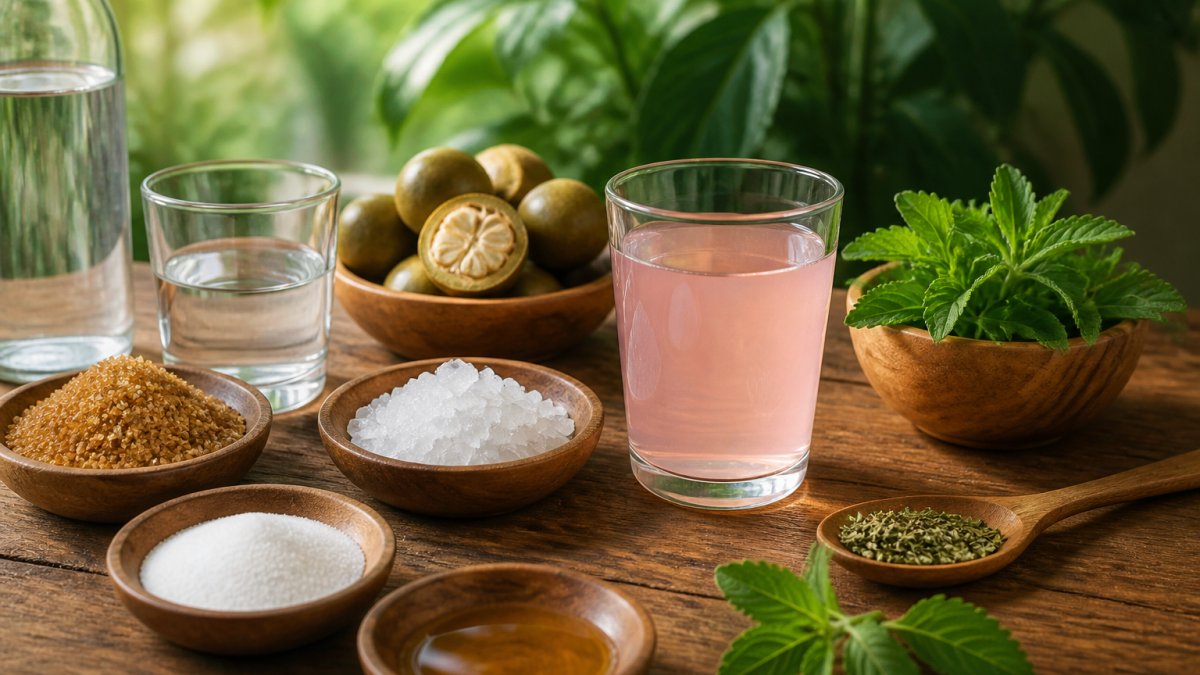
Natural sweeteners in electrolyte drinks fall into three families: fruit-derived extracts, rare sugars, and sugar alcohols. Each behaves differently in a shaker bottle and affects blood glucose and digestion differently.
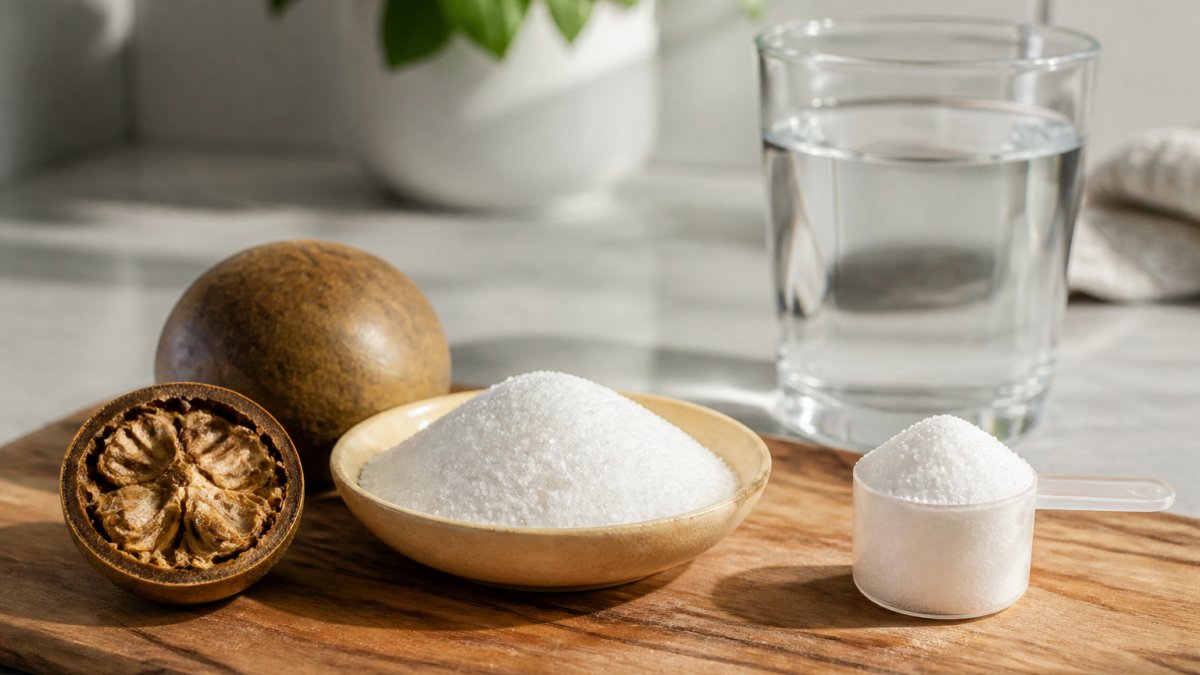
Monk Fruit Extract
Monk fruit, also called luo han guo, is a small melon native to southern China. Its extract contains mogrosides, which taste sweet without adding carbohydrates, and is roughly 150 to 200 times sweeter than sugar.
The upside is clean sweetness with no bitter finish and no effect on blood sugar. The catch is cost: monk fruit is expensive, so many brands blend it with cheaper sweeteners.
Allulose
Allulose is a rare sugar found in small amounts in figs, raisins, and maple syrup. It tastes like sugar but passes through the body mostly unabsorbed, most people absorb less than a fifth, so it barely affects blood glucose.
For hydration, allulose adds a rounded, sugar-like mouthfeel that stevia and monk fruit cannot replicate alone. The drawback is digestive tolerance: larger doses can cause gas or loose stools, so start with a partial scoop.
Erythritol and Other Sugar Alcohols
Erythritol is a sugar alcohol found naturally in fruit and fermented foods. It carries almost no calories, does not raise blood sugar, and is absorbed before reaching the large intestine, so it causes less bloating than maltitol or sorbitol.
Still, erythritol is manufactured in nearly all commercial use, and a growing number of drinkers avoid it on principle. If you are one of them, look for "no erythritol" on the label rather than trusting a front-of-pack claim.
| Sweetener | Source | Blood Sugar Impact | Common Drawback |
|---|---|---|---|
| Monk fruit | Melon extract | None | High cost, often blended |
| Allulose | Rare sugar | Minimal | Digestive upset at high doses |
| Erythritol | Sugar alcohol | None | Digestive sensitivity in some |
| Stevia | Leaf extract | None | Bitter, licorice aftertaste |
Electrolytes Without Stevia: What to Check on the Label
Electrolytes without stevia require reading past the front of the tub: the nutrition panel gives sodium, potassium, and carbohydrate content, while the ingredient list tells you what is actually sweetening it.
Start with the ingredient list, not the nutrition panel
Under FDA rules, ingredients are listed in descending order by weight. If monk fruit extract appears after "natural flavors" and citric acid, something else is carrying the sweetness. If erythritol is first, the product is mostly sugar alcohol by weight, whatever the front label says.
Watch for these patterns:
- Blend language. "Monk fruit blend," "stevia blend," and "natural sweetener blend" are not standardized terms. They usually mean the named sweetener plus a cheaper carrier such as erythritol, maltodextrin, or dextrose. The carrier appears separately in the ingredient list.
- "Natural flavors." This term covers a wide range of flavor compounds and tells you nothing about sweetness. A product can be sweetened partly through flavor systems and still list "natural flavors" without naming a sweetener.
- Sugar alcohols by name. Erythritol, maltitol, sorbitol, xylitol, and isomalt must be listed individually. If you react to one, scan for all of them, not just the one you know.
Do the serving-level math
Serving sizes are not standardized across hydration powders, one scoop may be 6 grams, another 12, so per-tub comparisons are meaningless. Convert to a per-serving basis: divide tub price by servings, and compare sodium, potassium, and carbohydrate per serving. A large tub with a large scoop can cost more per drink if it delivers 20 servings instead of 30.
Read the carbohydrate line carefully
"Zero sugar" is not the same claim as "0 g total carbohydrate." Sugar alcohols and allulose still appear in the carbohydrate line, and the FDA requires sugar alcohols to be declared under Total Carbohydrate with a separate sub-line. Allulose can be excluded from total and added sugars under current FDA labeling. If you track carbs for keto, read the full breakdown, not the sugar line.
Check how sweeteners interact with the electrolyte blend
Sweeteners do not sit in isolation; they compete with sodium, potassium, magnesium, and acidity:
- Sodium masks bitterness. A saltier formula can make stevia's bitter notes less obvious.
- Acidity shifts perception. Citric and malic acid sharpen sweetness and amplify erythritol's cooling notes.
- Magnesium adds its own taste. Magnesium citrate and oxide can read as chalky or metallic.
Two products with identical sweetener systems can taste completely different depending on the minerals and acidulants around them, which is why a sample matters more than an ingredient list.
- Sweetener source. Confirm the exact name, not a blend, and check where it falls in the ingredient order.
- Sodium per serving. Compare in milligrams per serving against your daily needs and any medical guidance you follow.
- Carbohydrate breakdown. Read total carbohydrate, total sugars, added sugars, and sugar alcohol as separate lines.
A common mistake is assuming "natural" means unsweetened. Plenty of natural products still lean on monk fruit, allulose, or coconut sugar, and coconut sugar does raise blood glucose. The FDA nutrition labeling guidance is a useful reference for reading the panel correctly.
Monk Fruit Electrolyte Powder: A Closer Look
Monk fruit electrolyte powder is the closest single-ingredient swap for stevia and our first recommendation for most people: sweetness without carbohydrates, no bitter finish, no clumping in cold water.
The trade-off is formulation. Pure monk fruit is costly, so a good product uses a small amount alongside a functional base or blends it with allulose for body.
At Hydrate Heroes, our plant-based formula combines six functional mushrooms with premium electrolytes, sweetened without stevia, sucralose, or erythritol.
Unsweetened Electrolyte Powder: Options for Zero Sweeteners
Unsweetened electrolyte powder is the simplest answer for anyone who wants complete control over taste. These products contain electrolytes and little else, so you add your own sweetness, a squeeze of citrus, or nothing.
The advantage is total transparency: no sweetener to tolerate, no aftertaste, no sugar alcohol to upset your stomach, and it mixes into coffee, tea, or a smoothie without clashing.
Unsweetened options suit a few specific groups well:
- People with strong sensitivity to any sweetener, natural or artificial
- Anyone managing a condition that requires precise sodium control
- Drinkers who prefer to sweeten with a measured amount of honey or maple syrup
Comparing Stevia-Free Hydration Supplements: Taste, Ingredients, and Cost
Comparing stevia-free hydration supplements comes down to more than sweetener choice. Performance depends on dissolution, taste in cold water, interaction with sodium and acidity, and cost per serving. No product wins every trade-off, so match the formula to how you actually use it.
How each sweetener performs in a hydration powder
Sweeteners behave differently in a shaker bottle than in a baked good or a coffee. What to expect from each family in a drink mix:
| Sweetener | Dissolution in cold water | Taste in a mineral base | Typical use level | Digestive notes |
|---|---|---|---|---|
| Monk fruit extract | Dissolves cleanly; little grit at normal doses | Clean sweetness; can taste flat without acid | Very small (high potency) | Generally well tolerated |
| Allulose | Dissolves well; adds body and mouthfeel | Rounded, sugar-like; can mute tart flavors | Larger by weight | Gas or loose stools at higher doses in some people |
| Erythritol | Dissolves well; can leave a cooling sensation | Sweet with a cooling note that some dislike | Moderate | Less bloating than maltitol or sorbitol, but individual sensitivity varies |
| Stevia (reference) | Dissolves well | Bitter, licorice-like finish that builds with sips | Small | Generally well tolerated; blends may include bulking agents |
| Unsweetened | No sweetener to dissolve | Plain and salty; relies entirely on flavoring | None | No sweetener-related concerns |
Two practical points follow. Monk fruit and stevia are both high-potency, so the gram amount is tiny and the carrier often determines mouthfeel. Allulose is used at much higher gram levels, which is why it adds body but is also the sweetener most likely to cause digestive upset at full doses.
Match the product to your use case
The right stevia-free choice depends on when and why you drink it:
- Everyday desk hydration. A lightly sweetened monk fruit formula or an unsweetened powder you flavor yourself works well. Sodium needs are modest, and taste fatigue matters more than electrolyte load.
- Endurance and hot-weather training. Higher sodium matters more than sweetness. A monk fruit or allulose formula with a defined sodium dose per serving is easier to drink in volume than a heavily sweetened one.
- Ketogenic or low-carb tracking. Read the full carbohydrate breakdown, not just the sugar line. Monk fruit and erythritol contribute little to no digestible carbohydrate; allulose is treated differently under FDA labeling and should be checked on the specific panel.
Cost per serving, not cost per tub
Tub price is the least useful number on the shelf. Divide it by servings per container, note the scoop size (a larger scoop means fewer servings), and compare sodium and potassium per serving alongside cost, a cheap product delivering half the electrolytes per scoop is not actually cheaper. Monk fruit formulas typically cost more per serving than erythritol blends, unsweetened powders vary widely by mineral form, and allulose sits middle-to-high because the use level is higher by weight.
Taste is the variable you cannot read on a label
Sweetener performance depends on the flavor system around it. Citric acid, fruit powder, and salt change how sweetness reads, and magnesium and potassium chloride can add bitterness a sweetener must cover. That is why a single-serve packet is worth buying before a full tub: no label or review substitutes for trying it in your own bottle.
A structured way to choose among stevia-free options
Use this sequence to narrow the field:
- Decide whether you want any sweetness. Unsweetened gives total control; lightly sweetened gives convenience.
- Pick a sweetener family that matches your tolerance. Monk fruit first for most people; allulose for mouthfeel if you tolerate it; erythritol only if you do not react.
- Check the mineral forms and doses per serving. Sodium, potassium, and magnesium matter more for hydration than the sweetener does.
Practical Tips for Choosing and Using Stevia-Free Hydration Supplements
Choosing well starts with matching the product to your actual use, not the best-sounding label.
- Match sodium to sweat loss. Long, hot training sessions call for more sodium than a quiet workday.
- Start with a half scoop. Any new sweetener, especially allulose or a sugar alcohol, deserves a gradual introduction.
- Check caffeine content. Some mixes add caffeine for focus; if you are sensitive, choose a caffeine-free formula.
Digestive tolerance is the variable most guides skip.
For anyone weighing a mushroom-based formula against a conventional one: the electrolytes do the hydration work.
If you are managing diabetes or another condition that affects sodium intake, run the label past your clinician before you buy. The CDC guidance on sugar substitutes and the National Institutes of Health dietary supplement fact sheets are both reasonable starting points for understanding what each sweetener does in the body.
The hardest part of switching away from stevia is not finding an alternative, it is finding one you will drink every day without forcing it down.
Hydrate Heroes was built for exactly that problem.
Frequently Asked Questions
What electrolytes don't use stevia?
Many electrolyte powders now avoid stevia by using alternatives like monk fruit extract, allulose, or erythritol. Some are completely unsweetened. Check the ingredient list for terms like 'steviol glycosides' or 'stevia leaf extract' to confirm. Brands that emphasize clean labels often highlight 'no stevia' on packaging. For example, Hydrate Heroes uses a proprietary blend without stevia, sucralose, or erythritol. Always read the label to ensure the product meets your preferences.
How do monk fruit and stevia compare in electrolyte drinks?
Monk fruit extract comes from the luo han guo fruit and contains mogrosides, which provide sweetness without calories. It has a mild, fruity taste and no bitter aftertaste, unlike stevia which can taste bitter or licorice-like to some people. Monk fruit is often blended with erythritol or allulose to bulk up the sweetness. In electrolyte drinks, monk fruit is generally considered a natural alternative to stevia, but check for added sugar alcohols if you're sensitive.
Can hydration supplements be unsweetened?
Yes, unsweetened electrolyte powders contain no added sweeteners of any kind. They typically provide sodium, potassium, magnesium, and other minerals without any flavor or sweetness. These are ideal for people who want complete control over taste or who are sensitive to sweeteners. You can add a squeeze of lemon or a pinch of salt if desired. Unsweetened options are also useful for those following strict elimination diets or who simply prefer plain water.