 comparison
Low Potassium Electrolyte Powders for Spironolactone
Table of Contents
- Why Low Potassium Electrolyte Powders Matter for Spironolactone Users
- Electrolyte Powders with Potassium and Spironolactone: What You Need to Know
- Electrolyte Supplements with Lower Potassium Content: Top Options
- Potassium in Electrolyte Drinks: Safe Serving Thresholds
- Sugar-Free and Clean Label Options
- Ingredients to Avoid While Taking Spironolactone
- How to Choose the Right Electrolyte Powder for Your Needs
- Frequently Asked Questions
Last Updated: October 20, 2026
Why Low Potassium Electrolyte Powders Matter for Spironolactone Users
If you're taking spironolactone, your kidneys handle potassium differently, making standard electrolyte powders risky. The best low potassium electrolyte powders for spironolactone support hydration without pushing potassium into dangerous territory.
Spironolactone is a potassium-sparing diuretic: it tells your kidneys to hold onto potassium rather than flush it out. Most electrolyte supplements contain significant potassium, so drinking them works against your treatment plan.
This guide shows how to read labels and select low potassium electrolyte powders that keep you hydrated safely.
Electrolyte Powders with Potassium and Spironolactone: What You Need to Know
How Spironolactone Affects Potassium Levels
Spironolactone blocks aldosterone, the hormone that tells your kidneys to excrete potassium. With aldosterone blocked, your kidneys retain potassium, which is why your doctor monitors levels with regular lab work.
Normal blood potassium ranges from 3.5 to 5.0 mEq/L. On spironolactone, levels trend toward the high end and sometimes above it, hyperkalemia, which can cause serious cardiac and muscular problems. Be deliberate about potassium intake.
A powder with 400mg of potassium per serving, drunk daily, adds a load that accumulates over weeks and months.
Reading Electrolyte Labels for Potassium Content
The nutrition facts label is your most important tool. Look for the "Potassium" line; it tells you exactly how much potassium is in one serving.
Most conventional sports drinks and electrolyte powders list 150-500mg of potassium per serving. For spironolactone users, anything over 100mg is worth reconsidering; 50mg or less is genuinely safer.
Also check the serving size. A product might look low-potassium until you realize the serving is half a scoop, a full scoop doubles the potassium. Verify before you commit.
Electrolyte Supplements with Lower Potassium Content: Top Options
Most electrolyte roundups rank by taste, price, or workout performance, useless for someone on spironolactone. The only comparison that matters is potassium per serving on the nutrition facts panel, and how recently it was verified. Here's a framework for a verified low-potassium shortlist.
What Makes a Formula Safe for Spironolactone
A safe low-potassium electrolyte powder prioritizes sodium and magnesium while keeping potassium at or near zero. Sodium supports fluid balance and nerve signaling; magnesium supports muscle function and energy.
Three label checks separate a genuinely suitable product from one that only markets itself as hydrating:
- Potassium per serving, not per container. A tub can advertise "low potassium" while a full scoop delivers 200mg or more. Read the potassium line under the nutrition facts, then confirm the serving size matches how you actually mix it.
- Potassium source ingredients. If potassium chloride, potassium citrate, potassium gluconate, or potassium-based salt substitutes (often labeled "lite salt" or "salt substitute") appear in the ingredient list, treat the product as a potassium source regardless of the front-of-package claim.
- Sodium-to-potassium ratio. A formula built around sodium with little or no potassium is the direction you want. A 2:1 or 3:1 sodium-to-potassium ratio is common in sports formulas, but for spironolactone users a ratio closer to "sodium present, potassium absent" is the safer target.
Verified Low-Potassium Comparison: What to Confirm on the Label
Rather than repeat marketing claims, use this checklist against any product you're considering. Fill in the numbers from the current label and note the date, because formulas change without notice.
| What to Verify | Where to Look | Why It Matters for Spironolactone |
|---|---|---|
| Potassium per serving (mg) | Nutrition Facts, "Potassium" line | The single most important number; target zero or minimal |
| Serving size and scoops per serving | Nutrition Facts, top of panel | A half-scoop serving can hide a full-scoop potassium load |
| Potassium ingredients | Ingredient list | Potassium chloride, citrate, gluconate, and salt substitutes are potassium sources |
| Sodium per serving (mg) | Nutrition Facts | Sodium is the electrolyte you can lean on instead |
| Magnesium per serving (mg) | Nutrition Facts | Supports muscle and energy without potassium risk |
| Label date or formula version | Package or manufacturer site | Formulas change; a 2023 label may not match today's tub |
| Other active ingredients | Ingredient list | Flag NSAIDs, licorice, or stimulant blends that interact with therapy |
A practical pattern: shortlist two or three products listing zero or near-zero potassium, confirm the current label on the manufacturer's site, and bring that shortlist to your pharmacist before buying.
Sodium and Magnesium: The Minerals to Lean On
When potassium is off the table, sodium and magnesium carry the hydration load. Typical sports powders land in these ranges per serving:
| Electrolyte Component | Typical Range | Practical Target for Spironolactone Users | Why It Matters |
|---|---|---|---|
| Sodium | 200-500mg | 300-500mg | Supports fluid balance and nerve signaling |
| Magnesium | 50-200mg | 75-150mg | Aids muscle function and energy production |
| Potassium | 100-500mg | Zero to minimal | Minimizes hyperkalemia risk |
| Calcium | 0-200mg | 0-100mg | Balances mineral ratios without excess |
One caveat on sodium: if you also take blood pressure medication or have been told to watch sodium, a high-sodium electrolyte powder can work against that guidance. That is a conversation for your prescriber, not a label claim.
Potassium in Electrolyte Drinks: Safe Serving Thresholds
There is no universal "safe" potassium number on spironolactone. Safety depends on your kidney function, lab values, other medications, and diet. What follows is a method: calculate the potassium a powder adds, stack multiple servings against your total intake, and frame the question for your prescriber or pharmacist.
Step 1: Calculate Potassium From a Single Serving
Start with the nutrition facts panel. The potassium line gives milligrams per serving, but serving size is where people get tripped up.
- If the label says one scoop = one serving and 50mg potassium, a full scoop adds 50mg.
- If the label says one scoop = two servings, a full scoop adds 100mg, double what the front of the tub implies.
- If you use a rounded scoop or mix a double batch, multiply accordingly.
Write the number down. "Low potassium" is a marketing phrase; milligrams per serving is a fact you can compare.
Step 2: Stack Multiple Servings Against Your Day
Most people don't drink one serving. Mixing twice a day doubles the contribution: 100mg per serving becomes 200mg daily; 250mg becomes 500mg. That's before counting potassium from food.
Common foods add up quickly: a medium banana, a cup of cooked spinach, a medium potato with skin, and a cup of orange juice each contribute meaningful potassium. A powder contributing 200-500mg daily stacks on top of everything else you eat.
Step 3: Frame the Question for Your Clinician
Instead of asking "what is the safe limit," bring your clinician three numbers:
- Your most recent blood potassium result (in mEq/L).
- Your kidney function markers (creatinine and eGFR) from the same lab draw.
- The potassium per serving and servings per day from the powder you are considering.
With those three numbers, your prescriber or pharmacist can tell you whether the product fits your situation. Someone with stable potassium and normal kidney function is in a different position than someone whose levels are trending high or whose kidney function is reduced. Lab monitoring turns a general guideline into a personal threshold.
What to Avoid Rather Than Chase a Threshold
Because no single number fits everyone, minimize added potassium rather than chase a precise allowance:
- Choosing powders with zero or near-zero potassium per serving when possible.
- Avoiding potassium chloride, potassium citrate, potassium gluconate, and potassium-based salt substitutes in any supplement.
- Skipping "high-potassium" or "electrolyte replacement" blends marketed for endurance athletes, which tend to be the highest-potassium formulas on the shelf.
- Rechecking labels periodically, since formulas change and a product that was low-potassium last year may not be today.
This approach doesn't require a universal safe limit, just keep added potassium as low as practical and let your lab work and clinician guide the rest.
Sugar-Free and Clean Label Options
Most electrolyte powders use sugar or artificial sweeteners. If you're watching blood sugar or managing digestive issues, the sweetener choice matters.
Sugar-free options typically use stevia, monk fruit, erythritol, or sucralose. Stevia and monk fruit are natural, don't affect blood sugar, and are generally well-tolerated.
Clean label products minimize ingredients, electrolytes, a sweetener, maybe flavor, instead of additives, colors, and thickeners, reducing the risk of digestive issues or unexpected interactions with your medication.
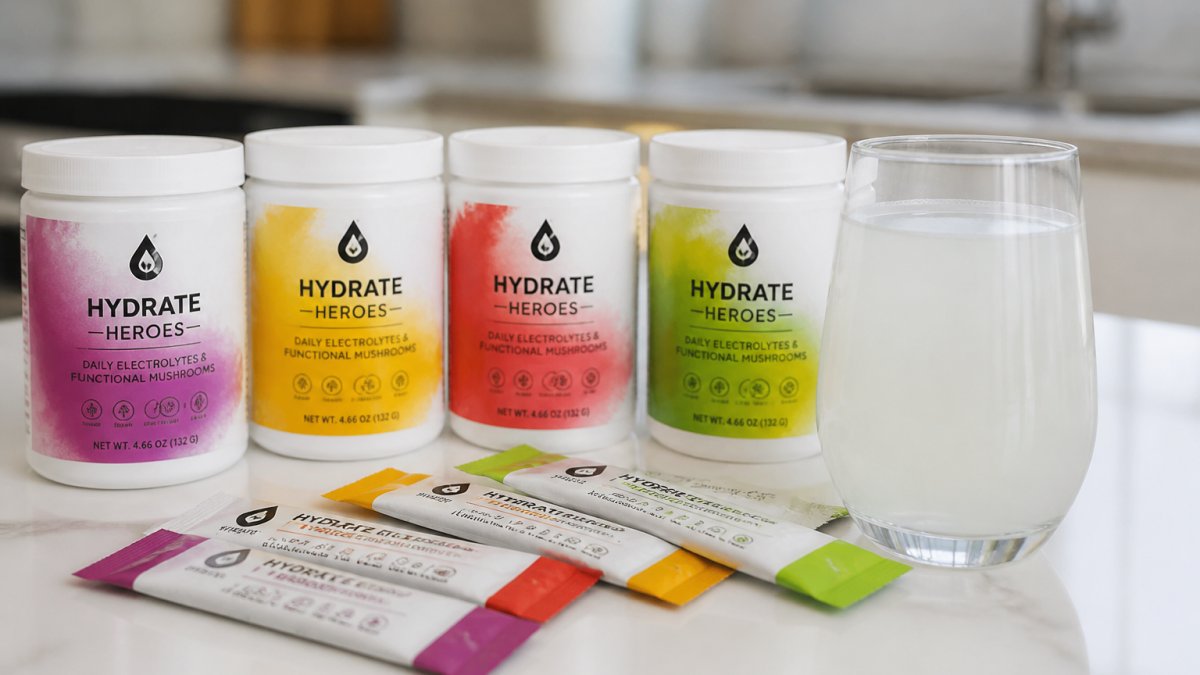
Hydrate Heroes specifically excludes sucralose and erythritol from our formula. We use natural sweetening and add six functional mushrooms, lion's mane, reishi, cordyceps, chaga, maitake, and shiitake.
Ingredients to Avoid While Taking Spironolactone
Certain ingredients can complicate your spironolactone therapy. Beyond high potassium content, watch for these:
- High sodium products paired with blood pressure medication: If you're also managing hypertension, excessive sodium can counteract your blood pressure treatment. Balance is key.
- NSAIDs in supplement form: Some electrolyte powders include anti-inflammatory ingredients. NSAIDs can reduce spironolactone's effectiveness and increase potassium retention further.
- Licorice or licorice-derived ingredients: Licorice can increase sodium retention and potassium loss, potentially interfering with spironolactone's intended effect.
- Excessive caffeine: While not directly an electrolyte issue, high caffeine can increase urination and complicate your hydration balance.
Read ingredient lists carefully. If potassium chloride, potassium citrate, or potassium gluconate appear early in the list, that product is not formulated for spironolactone users. If NSAIDs or licorice appear, consider a different option.
How to Choose the Right Electrolyte Powder for Your Needs
Start with your lab work: know your current potassium level and kidney function (creatinine and eGFR). That's your baseline for how strict you need to be.
Next, identify your hydration needs. Heavy sweating, regular exercise, or dehydration from another condition determines how much electrolyte support you actually need.
Finally, try the product and monitor your response.
For most people on spironolactone seeking a reliable low potassium electrolyte powder, Hydrate Heroes offers a formulation designed specifically for this scenario.
Choosing an electrolyte powder on spironolactone takes more attention than typical hydration decisions, but it's manageable when you know what to look for.
Frequently Asked Questions
Can you take electrolyte powders while taking spironolactone?
Yes, but only if the electrolyte powder is specifically formulated with low potassium content. Spironolactone causes your body to retain potassium, so consuming electrolyte supplements with high potassium can raise your blood potassium to dangerous levels. Always check the nutrition label for potassium per serving and verify the amount is safe with your healthcare provider before use. Most standard sports drinks contain too much potassium for spironolactone users.
How much potassium is safe in an electrolyte powder if I'm on spironolactone?
The safe amount depends on your individual kidney function and blood potassium levels, which your doctor monitors through lab work. Many formulas designed for spironolactone users contain 0-50mg of potassium per serving, compared to 300-500mg in standard electrolyte powders. Your healthcare provider can recommend a specific threshold based on your recent lab results and overall health. Never assume a product is safe without checking the nutrition facts label and consulting your doctor.
What ingredients should you avoid in electrolyte drinks while taking spironolactone?
Avoid electrolyte drinks high in potassium, potassium chloride, and salt substitutes that use potassium as their base. Also look out for added sugar, artificial sweeteners like sucralose and erythritol if you're sensitive to them, and products with unclear ingredient sourcing. Focus instead on powders that emphasize sodium and magnesium balance, use transparent labeling, and explicitly state their potassium content. Reading the full ingredient list and nutrition facts panel is essential before purchasing.
Should you ask your doctor before using an electrolyte supplement with spironolactone?
Yes, absolutely. Spironolactone affects how your body handles electrolytes and minerals, so any supplement, especially electrolyte powders, should be discussed with your prescribing physician or cardiologist. They can review your current blood potassium levels, kidney function, and overall medication regimen to determine whether a specific formula is appropriate for you. This conversation is especially important if you're also taking other medications or have underlying kidney or heart conditions.