 how-to
How to Stay Hydrated on Keto Without Excess Salt
Table of Contents
- Why Keto Changes Your Fluid and Electrolyte Needs
- How Much Water to Drink on Keto (Without Overdoing It)
- Keto Electrolytes Without Salt: Where to Get Sodium, Potassium, and Magnesium
- Potassium-Rich Keto Foods and Mineral-Rich Choices
- Low-Sodium Electrolyte Drinks and Hydration Options
- How to Assess Your Individual Sodium Needs
- When Thirst and Symptoms Warrant Medical Advice
- Frequently Asked Questions
Last Updated: October 17, 2026
Why Keto Changes Your Fluid and Electrolyte Needs
Staying hydrated on keto takes more thought than filling a bigger water bottle. A low-carb diet changes how your body holds water and minerals, and that shift starts within the first week. This guide from Hydrate Heroes explains how to stay hydrated on keto without excess salt, using food, smart sipping habits, and lower-sodium options that still work.
Here is the core problem. Carbs store water in your body. When you cut carbs, you release that stored water, and you lose sodium along with it. That is why so many people feel drained, foggy, or headachy in the first days of keto. It is not a sign you are doing keto wrong. It is a sign your fluid and electrolyte balance is shifting.
The Fluid Loss Effect of Ketosis
Ketosis is the state where your body burns fat for fuel instead of glucose. As your body adapts, it sheds water and the minerals that travel with it. The result is more urination and a lower baseline of sodium in your system.
Many people find this phase brings:
- More trips to the bathroom
- A drop in energy
- Headaches and lightheadedness
- Muscle cramps or twitching
These are common. They are also manageable if you plan ahead.
Signs of Dehydration and Electrolyte Imbalance
Thirst is a late signal. By the time you feel it, you may already be behind. Watch for these earlier clues:
- Dark yellow urine
- Dry mouth that water does not fix
- Dizziness when standing up
- Fatigue that rest does not clear
- Headache that builds through the day
If you notice several of these at once, treat it as a prompt to adjust your fluids and minerals, not just to drink more plain water.
How Much Water to Drink on Keto (Without Overdoing It)
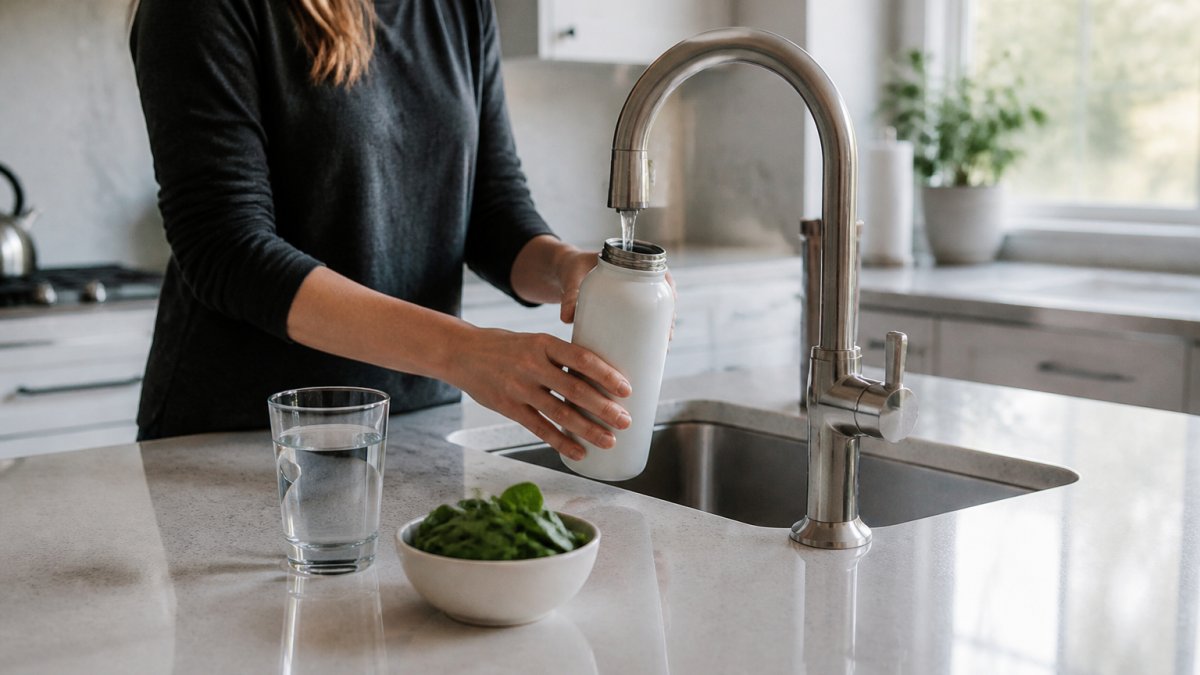
There is no single number that fits everyone. A common approach is to aim for steady sipping through the day rather than large gulps at once. Most people do well with a bottle within reach and a glass with each meal.
The bigger risk on keto is not drinking too little. It is drinking too much plain water without replacing minerals. That dilutes what little sodium you have left and can make you feel worse, not better. This is the part most guides get wrong.
A Simple Daily Hydration Routine
Use this as a starting template, then adjust to your body:
- Morning: One glass of water with a pinch of salt or a low-sodium electrolyte mix.
- Mid-morning: A full bottle of water, sipped slowly.
- Lunch: Water or herbal tea alongside mineral-rich food.
- Afternoon: Another bottle, plus a cup of bone broth if you feel low.
- Evening: Sip water, but ease off close to bedtime to protect sleep.
- Check: Glance at urine color once or twice a day.
Keto Electrolytes Without Salt: Where to Get Sodium, Potassium, and Magnesium
You still need sodium on keto. The goal is not zero salt, it is balanced salt. Your body needs some sodium to hold water in the right places and keep nerves and muscles working.
The three minerals that matter most:
- Sodium: Helps hold fluid balance. Get small amounts from food and a measured electrolyte mix.
- Potassium: Supports muscle and heart function. Found in leafy greens, avocado, and mushrooms.
- Magnesium: Helps with cramps, sleep, and mood. Found in nuts, seeds, and dark leafy greens.
A measured hydration powder gives you a set amount per serving, which beats guessing. That is the appeal of a formula like Hydrate Heroes, which uses Balanced 88 Gold Sodium™ to keep sodium moderate rather than loading it up. It also skips sucralose and erythritol, two sweeteners some people avoid for gut reasons.
Potassium-Rich Keto Foods and Mineral-Rich Choices
Food is the steadiest way to get minerals without tipping sodium too high. Build meals around these:
- Avocado
- Spinach and kale
- Mushrooms
- Salmon and other fatty fish
- Almonds and pumpkin seeds
- Bone broth
A plate with greens, avocado, and fish covers potassium and magnesium in one sitting. Add a low-sodium electrolyte drink on hot days or after hard training, and you cover the gaps without overdoing salt.
Low-Sodium Electrolyte Drinks and Hydration Options
Not every electrolyte drink is a salt bomb. You have real choices:
- Plain water for baseline hydration
- Herbal tea for variety without sugar
- Bone broth for minerals and a savory option
- Low-sodium electrolyte powder for measured minerals
- Water with lemon and a light pinch of salt as a cheap homemade option
Look for zero-sugar, zero-carb drinks. Many sports drinks carry sugar that knocks you out of ketosis, and some "clean" powders hide sweeteners that bother sensitive guts. Read the label and check the sodium number per serving so you know what you are getting.
How to Assess Your Individual Sodium Needs
Most keto guides hand out one sodium target for everyone. That is the wrong frame for this question. Your sodium need is a moving number shaped by how much you sweat, how hot it is, how hard you train, what medications you take, and whether you have a condition that makes sodium risky. The goal is not to hit a number, it is to find the smallest amount that keeps you feeling steady, then add only when your circumstances call for it. Refining these personal requirements becomes much easier when you integrate them into the broader framework provided by a beginner's guide to keto.
Work through these factors in order:
| Factor | Points toward lower sodium | Points toward higher sodium |
|---|---|---|
| Activity | Desk work, light walking | Hard training, long sessions, physical job |
| Climate | Cool, indoor, air-conditioned | Hot, humid, outdoor |
| Sweat | Minimal, not salty | Heavy, leaves salt rings on clothes |
| Symptoms | None | Cramps, dizziness on standing, headaches |
| Medications | Diuretics or blood-pressure drugs (ask your doctor) | None affecting fluid balance |
| Health conditions | High blood pressure, kidney disease, heart failure (follow medical advice) | No restrictions |
A practical way to use the table: start at the low end. Eat mineral-rich whole foods, drink to thirst, and use a low-sodium electrolyte mix only on days that stack several higher-need factors, hot weather plus a long workout, for example. If cramps, dizziness, or headaches persist for more than a few days despite that, add one measured serving of a low-sodium electrolyte drink and reassess. If symptoms still do not improve, that is a prompt to talk to a clinician rather than to keep adding salt.
Two cautions matter more than any target. First, if you take diuretics or blood-pressure medication, or you manage kidney, heart, or liver disease, do not self-adjust sodium, your clinician sets that number. Second, "low sodium" does not mean zero. Stripping out all sodium on keto commonly backfires with worse cramps and fatigue. The aim is the least you need, not none at all.
When Thirst and Symptoms Warrant Medical Advice
Some symptoms are not a hydration tweak. Get medical advice if you notice:
- Persistent dizziness or fainting
- Heart palpitations
- Confusion or trouble concentrating that worsens
- Very dark urine or little urination
- Swelling in the legs or hands
- Symptoms that do not improve after adjusting fluids
People with kidney disease, heart conditions, or those on diuretics or blood pressure medication should not self-adjust sodium without guidance. The National Kidney Foundation's guidance on sodium and fluid is a useful starting point, and your doctor can tailor it to you.
For general fluid guidance, the CDC's advice on water and hydration is a solid reference. And if you want to understand how the body handles sodium at a deeper level, the NIH's overview of sodium in the diet explains the science clearly.
Keto hydration does not have to mean drowning your food in salt or guessing at your minerals. The challenge is balance: enough sodium to hold fluid, enough potassium and magnesium to keep muscles and mood steady, and enough water without diluting what you have. At Hydrate Heroes, we built our plant-based powder around exactly that idea, with six functional mushrooms, Balanced 88 Gold Sodium™, zero sugar, and just five calories per serving, plus no sucralose or erythritol. Make your daily hydration routine simple, clean, and built for keto.
Frequently Asked Questions
How can I stay hydrated on keto without consuming too much salt?
You can stay hydrated on keto without excess salt by drinking plain water throughout the day, choosing low-sodium electrolyte drinks, and getting minerals from foods like avocado, spinach, and almonds. If you sweat heavily or exercise, replace some fluids with a low-sodium hydration powder. Track how you feel and adjust based on thirst, urine color, and symptoms like cramps or headaches.
How much water should I drink on a keto diet?
Most people on keto do well with a practical approach of drinking a glass of water with each meal and sipping throughout the day, but needs vary with body size, activity, and climate. Check urine color: pale yellow suggests adequate hydration, while dark yellow or infrequent urination signals you need more fluids.
Can you get enough electrolytes on keto without adding salt to your water?
Yes, you can meet electrolyte needs through food. Potassium-rich keto foods like avocado, spinach, and salmon, plus magnesium sources such as almonds and pumpkin seeds, help replenish minerals. Sodium is also present in eggs, cheese, and bone broth. If you sweat heavily or feel keto flu symptoms, a low-sodium electrolyte drink can fill gaps without overloading on salt.
When should I talk to a healthcare professional about dehydration or electrolyte symptoms?
Seek medical advice if you experience persistent dizziness, confusion, heart palpitations, severe muscle cramps, or swelling in your legs and ankles. These can signal an electrolyte imbalance that needs professional assessment. Also consult a doctor before changing hydration habits if you have kidney disease, heart failure, or take diuretics or blood pressure medication.