 how-to
Stay Hydrated Without Bloating From Sodium
Table of Contents
- Why Sodium Makes You Bloated (and What Actually Helps)
- Signs of Water Retention You Should Not Ignore
- How Much Water Do You Actually Need Each Day?
- Foods That Help Reduce Bloating and Balance Sodium
- Low Sodium Electrolyte Replacement: What to Look For
- Hydration Timing Strategies That Prevent Bloat
- When Bloating From Sodium Needs a Doctor's Attention
- Frequently Asked Questions
Last Updated: September 17, 2026
Why Sodium Makes You Bloated (and What Actually Helps)
Most people blame water for bloating. The real culprit is usually sodium. If you want to stay hydrated throughout the day without feeling bloated from excessive sodium, you have to fix your salt-to-water ratio, not just drink more.
The Sodium-Water Balance in Plain Terms
Your body runs on a narrow sodium range. When sodium climbs, your kidneys hold water to dilute it. This is fluid balance at work.
How to Spot Sodium-Induced Bloat vs. Normal Fullness
Normal fullness fades in a few hours. Sodium-induced bloat sticks around and often comes with swelling in your hands, feet, or face.
Watch for these signs:
- Tight rings or socks leaving deep marks
- Puffiness that shows up the morning after a salty meal
- A bloated abdomen that does not ease with a bathroom trip
- Sudden weight gain of a pound or two overnight
Signs of Water Retention You Should Not Ignore
Water retention is when your body holds extra fluid it would normally release. Occasional puffiness after a salty meal is normal. Ongoing swelling is not.
Here are the signs of water retention that deserve a closer look:
- Swelling in your legs, ankles, or feet that lasts more than a few days
- Puffiness in your face and hands that does not go away
- Rapid weight gain over a day or two
- Shortness of breath or swelling in the belly
How Much Water Do You Actually Need Each Day?
There is no single number that fits everyone. A common target is roughly half your body weight in ounces per day. A 150-pound adult would aim for about 75 ounces.
A Simple Personalized Hydration Calculator
Use this quick method to set your baseline:
- Write down your body weight in pounds.
- Divide that number by two. That gives your base ounces.
- Add 12 ounces for every 30 minutes of exercise.
- Add 8 to 16 ounces on hot days.
- Subtract 8 ounces for each large serving of watery fruit or veg.
If your urine is pale yellow, you are close. Dark yellow means drink more. Clear all day may mean you are overdoing it.
Foods That Help Reduce Bloating and Balance Sodium
The best foods that help reduce bloating are high in potassium and water. Potassium counteracts sodium, and water-rich foods hydrate without adding salt. But to use them well, it helps to understand why potassium works, because the mechanism tells you when and how much to eat.
The Sodium-Potassium Pump, in Plain Terms
Every cell in your body runs a tiny pump that moves sodium out and potassium in. This pump is what keeps your cells from swelling with water. When you eat a lot of salt, sodium floods the space outside your cells, and water follows it. Potassium helps your body push sodium out through urine so the water can leave too.
Potassium-Rich Foods to Reach For
Aim for foods that deliver both potassium and water, so you hydrate and rebalance at the same time:
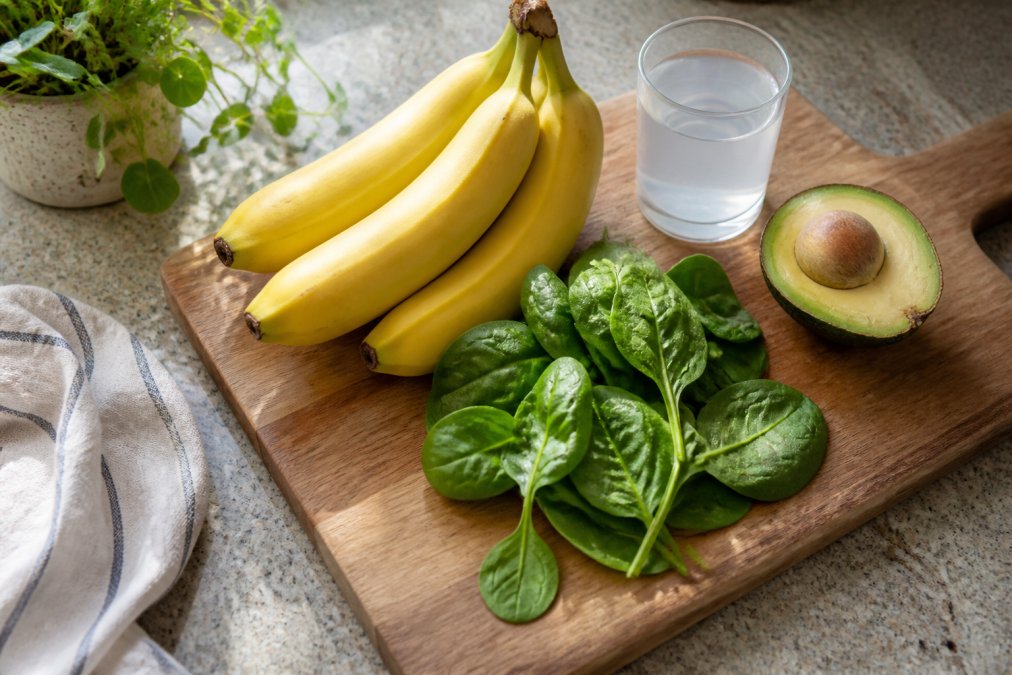
- Bananas, easy to carry and roughly 400 mg of potassium each
- Spinach and leafy greens, high in potassium and magnesium
- Avocado, one of the densest potassium sources in produce
- Coconut water, a natural source of electrolytes with far less sodium than most sports drinks
- Cucumber and watermelon, mostly water and low in sodium
- Beans and lentils, good for potassium and fiber
- Potatoes and sweet potatoes, especially with the skin on
- Yogurt and milk, which pair potassium with fluid
Why Fiber and Water-Rich Foods Matter Too
Fiber supports digestive efficiency and keeps your gut moving. A slow gut can add to that heavy, bloated feeling, and it is easy to confuse gut bloat with sodium bloat. If your abdomen feels tight and gassy rather than puffy and swollen, fiber and fluids are usually the bigger lever.
A Simple Daily Target
Most adults fall short on potassium. A practical goal is to include a potassium-rich food at every meal rather than chasing a specific milligram number. If you are on kidney medications, potassium supplements, or have kidney disease, talk to your doctor before increasing potassium, too much can be dangerous for some people.
Low Sodium Electrolyte Replacement: What to Look For
Most sports drinks load up on sodium and sugar. That is the opposite of what you need if bloat is your problem. A low sodium electrolyte replacement can hydrate you without the puffiness.
Check the label for these:
- Sodium under 100 mg per serving
- Zero added sugar
- No sucralose or erythritol
- Potassium and magnesium included
- Clean, short ingredient list
| What to Check | Skip It | Choose It |
|---|---|---|
| Sodium | 300+ mg | Under 100 mg |
| Sugar | Added sugar | Zero sugar |
| Sweeteners | Sucralose, erythritol | None |
| Extras | Artificial colors | Potassium, magnesium |
Hydration Timing Strategies That Prevent Bloat
When you drink matters as much as how much. Chugging a large amount at once can leave you sloshy and bloated. But the bigger opportunity most guides skip is timing your water and potassium around high-sodium meals, the moment bloat actually starts.
The High-Sodium Meal Playbook
If you know a salty meal is coming, restaurant food, takeout, a holiday dinner, you can blunt the bloat before it starts:
- 30 to 45 minutes before the meal: Drink 8 to 12 ounces of water with a potassium-rich snack, like a banana or a handful of spinach. This front-loads potassium so your body is ready to move sodium out.
- During the meal: Sip 4 to 6 ounces, not a full glass. Large volumes of water with a salty meal dilute stomach acid and can make you feel heavier, not better.
- 60 to 90 minutes after: Drink another 8 to 12 ounces. This is when sodium is peaking in your bloodstream, so the water has somewhere useful to go.
- Skip the late-night catch-up glass. Drinking a large amount right before bed spikes overnight bathroom trips and morning puffiness.
A Day-Long Schedule That Works
- Start with 8 to 16 ounces of water when you wake up
- Sip 4 to 8 ounces every hour through the day
- Drink 30 minutes before a meal, not during it
- Slow down after 7 p.m. to protect your sleep
- Add electrolytes in the morning or after workouts
The thirst mechanism is your built-in guide, but it lags during exercise and in older adults. Sip on a schedule instead of waiting to feel parched.
Why Timing Beats Volume
Your kidneys can only process so much fluid per hour, roughly 0.8 to 1 liter. Drink faster than that and the excess sits in your stomach and tissues, which is exactly the sloshy, bloated feeling you are trying to avoid. Spreading intake across the day keeps you ahead of thirst without overwhelming your system.
Adjusting for Heat, Exercise, and Caffeine
Your timing needs shift with conditions. In heat or during exercise, sip every 15 to 20 minutes rather than hourly, and add electrolytes if you are sweating heavily. Caffeine has a mild diuretic effect, so pair coffee or tea with a glass of water rather than counting it as your fluid for the hour. Alcohol is the bigger culprit, it suppresses the hormone that tells your kidneys to hold water, which is why a salty meal plus drinks often leads to next-morning puffiness.
When Bloating From Sodium Needs a Doctor's Attention
Most bloating from sodium clears up with diet changes in a day or two. See a doctor if it does not.
Get checked if you notice:
- Swelling that lasts more than a week
- Bloating with weight loss or fatigue
- Puffiness in the belly along with shortness of breath
- Swelling in just one leg
- No relief after cutting back on salt
Frequently Asked Questions
How to get rid of bloat from too much sodium?
The fastest way to reduce sodium bloat is to drink more water, which helps your kidneys flush excess sodium through urine. Eat potassium-rich foods like bananas, spinach, and avocado to help balance your electrolyte levels. Light movement, such as a 15-minute walk, can also stimulate circulation and reduce fluid pooling. Avoid adding more salt to meals for the rest of the day and skip processed snacks. Most sodium bloat starts easing within 24 to 48 hours once you correct the imbalance.
How long does it take for sodium bloat to go away?
Sodium-induced bloating typically resolves within 24 to 72 hours, depending on how much excess sodium you consumed and how well your kidneys are functioning. Drinking adequate water, eating potassium-rich foods, and getting light exercise can speed up the process. If bloating persists beyond a few days despite reducing sodium intake, it may signal an underlying issue with kidney function or fluid balance that warrants a medical check.
Can drinking more water help reduce sodium-induced bloating?
Yes. When you drink more water, your body senses that fluids are plentiful and is more willing to release retained sodium through urine production. This is why dehydration can actually worsen bloating: your body holds onto sodium and water when it fears a shortage. Aim for consistent sips throughout the day rather than large amounts at once. Pairing water with electrolytes, especially low sodium electrolyte replacement options, helps your cells absorb fluid more efficiently.
What does sodium bloat feel like?
Sodium bloat often feels like a tight, swollen abdomen, puffy fingers or ankles, and sometimes a general sense of heaviness. Your rings might feel snug, and your clothes may fit differently than they did the day before. Unlike gas-related bloating, sodium bloat is driven by fluid retention and tends to affect the whole body, not just the stomach. It usually appears within hours of a high-sodium meal and fades as your body restores fluid balance.
Staying hydrated without the bloat comes down to balance: less sodium, more potassium, and steady sips through the day. If you want a cleaner way to hit that balance, Hydrate Heroes offers a plant-based option with six functional mushrooms, Balanced 88 Gold Sodium™, zero sugar, and just five calories per serving. It skips sucralose and erythritol, so you can hydrate without the additives that bother your gut. Get started with Hydrate Heroes and stay hydrated without the bloat.