 ultimate-guide
Signs of Over-Hydration During High Intensity Exercise
Table of Contents
- Why Over-Hydration Happens During High Intensity Exercise
- Exercise-Associated Hyponatremia Symptoms: What to Watch For
- How to Calculate Sweat Rate for Safer Fluid Replacement
- Electrolyte Balance for Athletes: Sodium, Potassium, and Fluid Intake
- Over-Hydration vs. Dehydration: Telling the Difference
- Prevention and Recovery: Building a Smarter Hydration Plan
- Frequently Asked Questions
Last Updated: October 4, 2026
Why Over-Hydration Happens During High Intensity Exercise
The signs of over-hydration during high intensity exercise start when drinking too much water during a long, hard effort dilutes your blood sodium to dangerous levels.
The core issue is simple physiology. When you sweat, you lose water and sodium. Replace only the water and you dilute what sodium remains in your bloodstream. Your cells respond by pulling water inward, and that swelling is what turns a mild headache into a hospital visit.
How Sodium Dilution Disrupts Fluid Balance
Sodium is the mineral that holds water in the right places. When serum sodium drops, fluid shifts out of your blood vessels and into your cells, a process driven by osmotic pressure. In the brain, that cellular swelling becomes cerebral edema, which is why the symptoms escalate so quickly from nausea to confusion. Your kidneys can normally excrete excess water, but during intense exercise blood flow diverts to your muscles, slowing that process exactly when you need it most.
Why Endurance Athletes Face Higher Risk
Long events carry the highest risk because they combine heavy sweating with hours of drinking. Slower runners who spend more time on course and drink at every aid station are especially vulnerable. Small body size matters too: a lighter athlete dilutes their sodium with less total fluid. American College of Sports Medicine position stand on exercise and fluid replacement
Exercise-Associated Hyponatremia Symptoms: What to Watch For
Exercise-associated hyponatremia (EAH) does not announce itself with a single dramatic sign. It progresses along a predictable curve, and the earliest symptoms are the ones most athletes dismiss as normal race fatigue. Knowing the order matters more than knowing the list, because the window to act closes fast once neurological symptoms appear.

The Symptom Timeline: What Appears First and Why
EAH symptoms track the movement of water into cells, starting in the gut and ending in the brain.
- Stage 1 (mild, serum sodium roughly 130-134 mmol/L): Nausea, bloating, stomach sloshing, and a dull headache. These are gastrointestinal because the gut is the first tissue to sense fluid overload. A common pattern is feeling full and sloshy while still thirsty, that mismatch is the single most reliable early flag.
- Stage 2 (moderate, roughly 125-129 mmol/L): Swelling in the hands, fingers, and ankles; lethargy; lightheadedness; muscle cramping that does not respond to stretching. The swelling is peripheral edema from fluid shifting into tissue.
- Stage 3 (severe, below 125 mmol/L): Confusion, disorientation, seizures, and loss of consciousness. This is cerebral edema, the brain swelling against the skull, and it is a true medical emergency.
Most practitioners find the transition from Stage 1 to Stage 2 can happen within 30-60 minutes during a hot, long effort, which is why the early signals deserve immediate attention rather than a "wait and see" approach.
Early Warning Signs: Nausea, Bloating, and Headache
- Nausea or stomach sloshing despite drinking
- Bloating and a feeling of fullness
- A persistent, throbbing headache that builds rather than fades
- Swelling in the hands, fingers, or ankles (rings feel tight, shoes feel snug)
- Lethargy and unusual weakness
- Lightheadedness or dizziness
- Muscle cramping that does not respond to stretching
- A paradoxical feeling of thirst while your stomach is visibly distended
Severe Symptoms: Confusion, Seizures, and When to Call 911
Confusion, disorientation, seizures, and loss of consciousness mean water intoxication has reached the brain. Call 911 immediately. Do not give more water, and do not wait to see if it passes. If the person is still conscious and able to swallow, a sodium-containing electrolyte drink or a salty snack may help, but never delay emergency care to administer it. MedlinePlus medical encyclopedia on low blood sodium
Why EAH Mimics Dehydration, and How to Tell Them Apart
This is the trap that catches even experienced athletes. Both conditions produce headache, nausea, fatigue, and dizziness, so the instinct is to drink more. That instinct is exactly wrong in an EAH scenario.
| Clue | Dehydration | Over-Hydration (EAH) |
|---|---|---|
| Body weight change | Loss | Gain |
| Urine color | Dark, concentrated | Pale or clear |
| Hands and fingers | Normal or dry | Puffy, swollen, tight rings |
| Stomach | Flat, possibly cramped | Bloated, sloshy |
| Thirst | Strong and consistent | Present but mismatched with fullness |
| Response to drinking water | Improves | Worsens |
The single fastest field test is body weight. A bathroom scale before and after a session tells you which direction you moved. Thirst is unreliable in both conditions because the thirst mechanism can misfire during prolonged exertion, and in EAH it often fires harder as sodium drops, a cruel signal that pushes athletes toward the wrong action.
How to Calculate Sweat Rate for Safer Fluid Replacement
Weigh yourself naked before and after a one-hour session, note how much you drank, and do the math. Every pound lost equals roughly 16 ounces of fluid. Add back what you drank during the session to get your total hourly sweat rate.
- Weigh in before, dry and empty
- Record fluid consumed during the session in ounces
- Weigh in after, same conditions
- Sweat rate = (weight lost in ounces) + (fluid consumed)
A common mistake is treating that number as a target to match ounce for ounce. Aim to replace about 75 percent of it, and let thirst guide the rest.
Electrolyte Balance for Athletes: Sodium, Potassium, and Fluid Intake
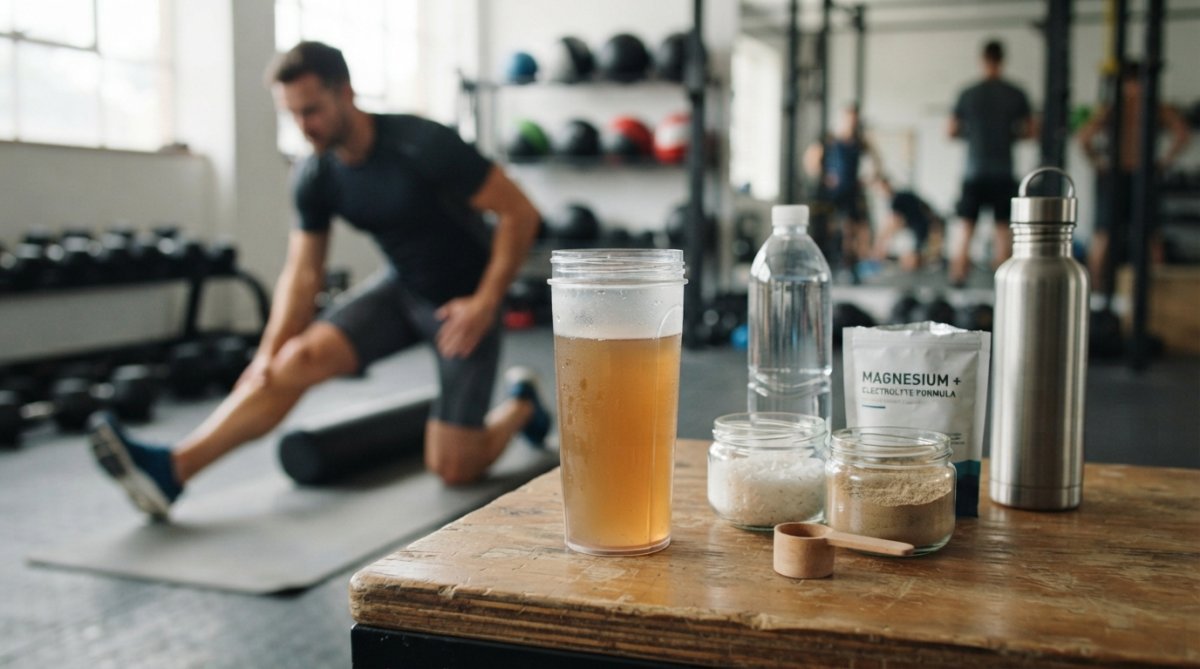
Electrolyte balance for athletes means replacing sodium in proportion to what you sweat out, not chasing a fixed number. Sodium is the priority; potassium and magnesium support muscle function but rarely cause hyponatremia on their own.
Plain water works fine for short sessions under an hour. Beyond that, choose a drink with meaningful sodium. A hypotonic or isotonic mix absorbs faster than a hypertonic one, which sits in the stomach and can worsen nausea. Our Balanced 88 Gold Sodium™ formula pairs sodium with six functional mushrooms, zero sugar, and no sucralose or erythritol.
| Situation | Best Fluid Choice | Why |
|---|---|---|
| Under 60 minutes | Plain water | Sodium loss is minimal |
| 1-3 hours, heavy sweat | Electrolyte mix | Replaces sodium, supports plasma volume |
| 3+ hours or hot conditions | Electrolyte mix, sodium-forward | Protects serum sodium over long duration |
| Post-exercise recovery | Electrolyte mix with fluid | Restores fluid balance and rehydration |
Over-Hydration vs. Dehydration: Telling the Difference
The two conditions share symptoms, which is exactly why they get confused. Both cause headache, nausea, and fatigue. The distinguishing clues are weight and swelling: dehydration means weight loss and dark, concentrated urine, while over-hydration means weight gain, bloating, and puffy hands. Thirst is unreliable in both cases, because the thirst mechanism can misfire during prolonged exertion. When in doubt, check your weight change and urine color before you drink more.
Prevention and Recovery: Building a Smarter Hydration Plan
Most articles stop at "drink to thirst" and call it prevention. That advice is correct but incomplete, because the highest-risk window for over-hydration is not during the event, it is the two to six hours after the finish line, when athletes aggressively rehydrate to "catch up." This is the rebound over-hydration problem, and it is the most under-covered safety angle in the hydration space.
Pre-Event: Start With a Sodium Baseline
Prevention begins before the gun goes off. A practical approach:
- 2-4 hours before: Drink 16-20 ounces of fluid with sodium. This gives your kidneys time to regulate volume before you start sweating.
- 15-30 minutes before: Another 8-12 ounces if urine is dark. Skip it if urine is already pale, pre-loading plain water before a long event is a known EAH risk factor.
- Know your sweat sodium: A sweat rate test (below) tells you how much fluid you lose. A sweat sodium test, available through sports labs and some athletic programs, tells you how salty that sweat is. "Salty sweaters" (white streaks on gear, stinging eyes) need more sodium per liter.
During the Event: Drink to Thirst, Not to Schedule
The old "drink before you're thirsty" rule has been walked back by sports medicine organizations because it drives over-drinking in slower athletes. Current thinking favors thirst as the primary guide, with sodium included in anything longer than an hour.
- Under 60 minutes: Plain water is fine.
- 1-3 hours: An electrolyte mix with meaningful sodium (roughly 300-600 mg per 16 ounces is a common range).
- 3+ hours or hot conditions: Sodium-forward mix, and consider sodium capsules if you are a heavy, salty sweater.
- Never exceed your sweat rate. Aim to replace about 75 percent of losses, not 100 percent.
Post-Event: The Rebound Over-Hydration Trap
Here is the neglected angle. After a long event, athletes often drink large volumes of plain water or low-sodium sports drink to "rehydrate." But the body is already primed for fluid retention, antidiuretic hormone (ADH) is elevated after prolonged exertion, which means your kidneys are holding water rather than excreting it. Pile plain water on top of that, and serum sodium can drop after the race, sometimes hours later.
A safer post-event protocol:
- Replace roughly 125 percent of fluid lost (weigh yourself to know the number), but do it over 2-4 hours, not in one sitting.
- Pair every liter with sodium. A sodium-containing electrolyte mix, a salty meal, or both. Sodium is what lets your body actually retain the fluid instead of diluting your blood.
- Watch for late symptoms. Headache, nausea, or confusion appearing 2-6 hours after a race is a red flag, not ordinary post-race fatigue.
- Avoid the "chug a gallon" instinct. The most common trigger for post-event EAH is a large volume of plain water consumed quickly to catch up.
The Weekly Habit That Catches Problems Early
Track morning body weight during heavy training weeks. A steady rise across several days is a quieter warning than any acute symptom, because it signals cumulative fluid retention before sodium drops into a dangerous range. Combine that with a simple sweat rate test, weigh naked before and after a one-hour session, add back what you drank, and divide by hours, and you have a personalized fluid target instead of a generic guideline.
CDC guidance on heat and hydration safety
Frequently Asked Questions
How do I tell if I'm overhydrated during a workout?
Watch for bloating, nausea, headache, and hands or feet that feel puffy. These are early over-hydration signs. If you are sweating heavily but drinking plain water faster than you sweat, your sodium levels can drop. Track your fluid intake against your sweat rate, and if symptoms like confusion or vomiting appear, stop and seek medical help immediately.
What is the difference between dehydration and hyponatremia?
Dehydration means your body has lost too much fluid and your sodium concentration is high. Hyponatremia means your serum sodium is too low, often from drinking too much water without replacing electrolytes. Both can cause nausea and headache, but hyponatremia can also bring confusion, swelling, and seizures. If you are gaining weight during a long event, you are likely overhydrated rather than dehydrated.
Can drinking too much plain water be dangerous for endurance athletes?
Yes. Drinking plain water beyond your sweat losses dilutes sodium in your blood, which can lead to exercise-associated hyponatremia. Endurance athletes are at higher risk because they drink for hours. Use a hydration plan that includes sodium, and check your weight before and after training. A small weight gain during exercise is a red flag.
How much water should a 200 lb athlete drink?
There is no single number, but a common starting point is 16 to 24 ounces per hour for moderate exercise, adjusted for heat and intensity. Weigh yourself before and after a one-hour session. For every pound lost, drink about 16 to 24 ounces. If you gain weight, cut back. Adding electrolytes helps your body hold the right amount of fluid.