 Listicle
11 Natural Potassium Rich Foods for Keto Diet Success
Last Updated: October 24, 2026
Quick Summary
The best natural potassium rich foods for keto are leafy greens, avocado, salmon, mushrooms, clams, and nuts, since they deliver high potassium with few net carbs. Cooked beet greens top the list at about 1,300 mg potassium for roughly 4 g net carbs per cup. Build meals around spinach, chard, and beet greens first, then add avocado, salmon, and clams for variety.
- Cooked beet greens provide about 1,300 mg potassium and roughly 4 g net carbs per cup.
- Leafy greens give you the most potassium per net carb of any food on the list.
- A medium artichoke costs about 7 g net carbs, so keep portions modest on strict keto.
- Chasing potassium alone can backfire if sodium is very low, so balance electrolytes.
- People with kidney disease or on certain medications should not increase potassium without medical guidance.
Table of Contents
- Why Potassium Matters on a Keto Diet
- Top Low-Carb Foods High in Potassium
- Keto Foods High in Electrolytes Beyond Potassium
- How Much Potassium Do You Need on Keto?
- Comparing Potassium and Net Carbs per Serving
- Practical Meal and Snack Combinations for Keto
- Safety and Preparation Tips for Potassium Rich Foods
- Building Your Keto Hydration Plan with Hydrate Heroes
- Frequently Asked Questions
Why Potassium Matters on a Keto Diet
Potassium is an essential mineral and electrolyte that helps regulate fluid balance, nerve signals, and muscle contractions, and it becomes especially important when you cut carbohydrates. At Hydrate Heroes, we hear from keto followers who feel drained, crampy, or foggy in the first few weeks, and potassium is often part of the answer.
Here's the mechanism in plain terms. Carbohydrates hold water in your body, so when you drop them sharply, you flush water and electrolytes together. Sodium gets most of the attention, but potassium leaves with it. MedlinePlus electrolyte overview explains how the body relies on potassium for normal cell and muscle function.
That's why so many people on keto feel off before they feel better. The fix isn't a bigger steak. It's deliberately choosing potassium rich foods that fit your carb budget.
Top Low-Carb Foods High in Potassium
The best low-carb foods high in potassium are leafy greens, avocado, salmon, mushrooms, and nuts, because they deliver a strong mineral punch without blowing your net carbohydrates. Below are 11 natural potassium rich foods for keto diet success, each with an approximate potassium and net-carb figure per common serving so you can see the trade-off at a glance.
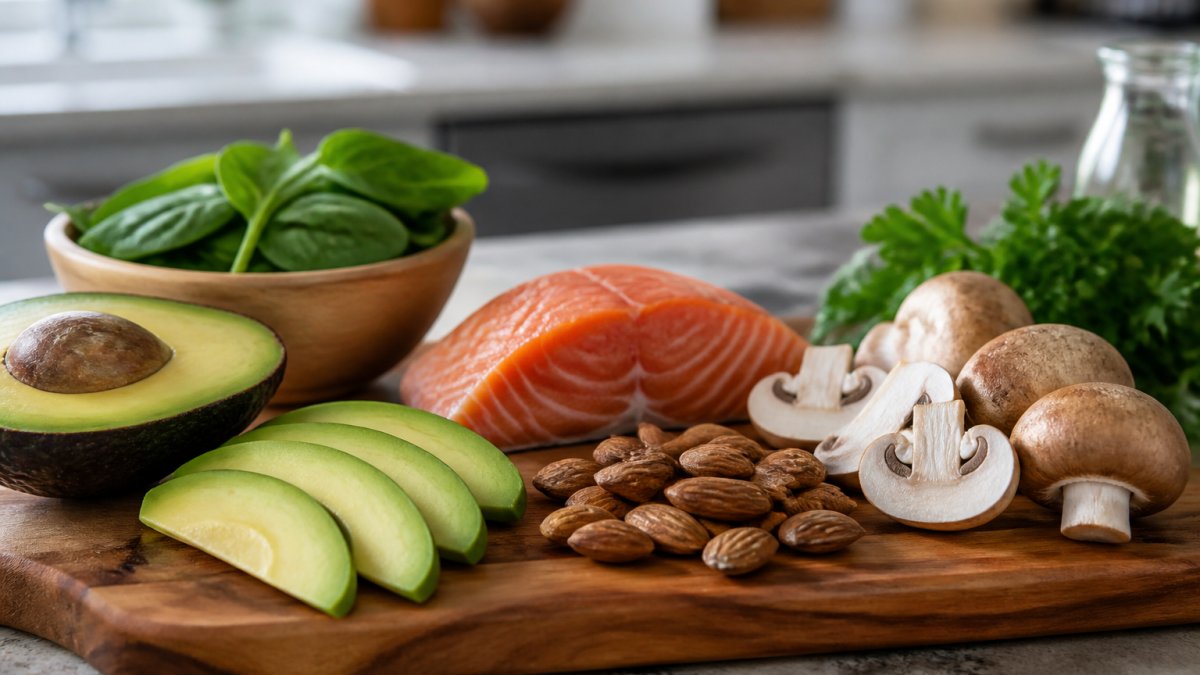
- Avocado - about 485 mg potassium and roughly 2 g net carbs per half a medium avocado. One of the richest whole-food sources, easy to slice into salads or mash with lime.
- Spinach, cooked - about 840 mg potassium and roughly 3 g net carbs per 1 cup cooked. Raw or sautéed, it disappears into omelets and smoothies.
- Swiss chard, cooked - about 960 mg potassium and roughly 3 g net carbs per 1 cup cooked. Sturdy leaves that hold up to heat and pair well with healthy fats.
- Beet greens, cooked - about 1,300 mg potassium and roughly 4 g net carbs per 1 cup cooked. The tops most people throw away, and a genuinely underrated pick.
- Artichoke - about 425 mg potassium and roughly 7 g net carbs per medium globe. Fiber-rich and satisfying, best in modest portions because the carb count climbs quickly.
- Mushrooms, white - about 555 mg potassium and roughly 2 g net carbs per 1 cup sliced. Low in carbs and high in savory flavor, so they bulk up any plate.
- Almonds - about 200 mg potassium and roughly 2 g net carbs per 1 oz (about 23 nuts). A handful covers a snack and adds protein.
- Salmon, cooked - about 325 mg potassium and zero net carbs per 3 oz. Protein plus potassium in one fillet.
- Clams, cooked - about 530 mg potassium and roughly 3 g net carbs per 3 oz. A seafood option many guides skip entirely.
- Chicken and meat - roughly 220 to 330 mg potassium and essentially zero carbs per 3 oz cooked. Reliable potassium with no carb cost.
- Full-fat plain yogurt - about 380 mg potassium and roughly 5 g net carbs per 1/2 cup. Check labels, since flavored versions hide sugar and can double the carb count.
A common mistake is assuming "healthy" means "unlimited." Portion size still governs your potassium and carb totals, which is why the per-serving figures above matter more than any single food's reputation. A cup of cooked beet greens and a medium artichoke both look like "vegetables," but one costs you about 4 g net carbs and the other about 7 g.
Keto Foods High in Electrolytes Beyond Potassium
Potassium is only one part of the electrolyte picture. Keto foods high in electrolytes also need to supply sodium, magnesium, and fluid, because these minerals work as a team. Office of Dietary Supplements magnesium fact sheet notes magnesium's role in muscle and nerve function, which is why low magnesium can feel like low potassium.
- Sodium: salt your food to taste, and consider a pinch in your water.
- Magnesium: leafy greens, nuts, and seeds are dependable sources.
- Calcium: dairy, canned fish with bones, and leafy greens contribute.
What most guides miss is that chasing potassium alone can backfire. If sodium is very low and you flood your system with potassium, you may feel worse, not better. Balance matters more than any single number. If you want the fuller picture of how these minerals interact, our guide on electrolyte balance and why you need sodium and potassium walks through it.
How Much Potassium Do You Need on Keto?
Most adults should aim for the general daily potassium target set by health authorities, and keto followers often need to be deliberate about hitting it because they cut so many plant foods. The Dietary Guidelines for Americans treat potassium as a nutrient of public health concern for the general population.
Rather than obsess over a single figure, track roughly and adjust. Signs you may be falling short include muscle cramps, fatigue, and palpitations. Our breakdown of the signs of electrolyte imbalance on keto helps you recognize them early, before they derail your week.
Watch out: people with kidney disease or those taking certain blood pressure and diuretic medications should not increase potassium without medical guidance. This is one area where "more" is not automatically better.
Comparing Potassium and Net Carbs per Serving
Competitors rarely show potassium and net carbs side by side with actual numbers, so here is the comparison that actually matters when you're choosing food. Values below are approximate for common servings, rounded from standard food-composition data, and labels vary by brand and preparation. Net carbs are total carbohydrates minus fiber.
| Food | Serving | Potassium (approx.) | Total Carbs (approx.) | Fiber (approx.) | Net Carbs (approx.) |
|---|---|---|---|---|---|
| Avocado | 1/2 medium | 485 mg | 6 g | 4 g | 2 g |
| Spinach, cooked | 1 cup | 840 mg | 7 g | 4 g | 3 g |
| Swiss chard, cooked | 1 cup | 960 mg | 8 g | 4 g | 3 g |
| Beet greens, cooked | 1 cup | 1,300 mg | 8 g | 4 g | 4 g |
| Salmon, cooked | 3 oz | 325 mg | 0 g | 0 g | 0 g |
| Clams, cooked | 3 oz | 530 mg | 5 g | 0 g | 3 g |
| Almonds | 1 oz | 200 mg | 6 g | 3 g | 2 g |
| Mushrooms, white | 1 cup sliced | 555 mg | 3 g | 1 g | 2 g |
| Artichoke | 1 medium | 425 mg | 14 g | 7 g | 7 g |
| Chicken thigh, cooked | 3 oz | 220 mg | 0 g | 0 g | 0 g |
| Full-fat plain yogurt | 1/2 cup | 380 mg | 6 g | 0 g | 5 g |
The pattern is clear: animal proteins and leafy greens give you potassium with almost no net carbohydrates, while starchy vegetables and legumes carry more carbs. Beet greens top the potassium column at about 1,300 mg per cooked cup for only about 4 g net carbs, which makes them the best potassium-per-net-carb pick on the table. Artichoke delivers solid potassium but costs about 7 g net carbs per medium globe, so it fits better on a more flexible low-carb day than a strict keto day.
That's the trade-off to track. For the deeper hydration side of the equation, see our keto hydration guide on why electrolytes are critical.
Practical Meal and Snack Combinations for Keto
Building potassium into your day is easier with repeatable combinations than with willpower. These pairings hit multiple electrolytes at once and stay low-carb.
- Breakfast: spinach and mushroom omelet cooked in butter, half an avocado on the side.
- Lunch: salmon salad over Swiss chard with olive oil and a sprinkle of almonds.
- Snack: a small handful of almonds plus a salted electrolyte drink.
- Dinner: chicken thighs with sautéed beet greens and roasted artichoke hearts.
A useful habit is to salt your food deliberately and drink water consistently rather than in giant gulps. If you're just starting out, our beginner's guide to keto electrolytes covers the first two weeks in detail.
Safety and Preparation Tips for Potassium Rich Foods
Preparation and portion size change both potassium and carb content, and getting them right protects your results. Cooking leafy greens shrinks volume dramatically, so a cup of cooked spinach delivers far more than a cup of raw, which is helpful but easy to overdo.
- Steam or sauté rather than boil greens if you want to keep more minerals in the food.
- Leave skins on where practical, since nutrients concentrate near the surface.
- Weigh or measure high-potassium foods instead of eyeballing them.
- Introduce new foods gradually to avoid digestive upset.
Watch out: potassium supplements sold over the counter can be risky without medical supervision, and food sources are the safer route for most people. If you have any kidney condition, talk to your doctor before loading up.
Building Your Keto Hydration Plan with Hydrate Heroes
A hydration plan ties your food choices to your fluid and electrolyte intake, and that's where most keto followers leave a gap. Food covers a lot, but busy days, training, and heat push your needs higher than spinach alone can handle.
At Hydrate Heroes, we built our powder around that gap. It combines six functional mushrooms with premium electrolytes, uses our proprietary Balanced 88 Gold Sodium™, and contains zero sugar with only five calories per serving. We deliberately exclude sucralose and erythritol, and the formula is plant-based, so it fits a clean keto approach without the bloating some sweeteners cause.
Our honest take: no powder replaces real food. Use it alongside potassium rich foods, not instead of them. Pair a salted drink with your meals, keep water steady through the day, and adjust based on how you feel. For the practical side of water timing and intake, our guide on staying hydrated on keto rounds out the plan.
Frequently Asked Questions
Which keto-friendly foods are naturally high in potassium?
Avocados, spinach, Swiss chard, mushrooms, salmon, almonds, and pumpkin seeds are excellent choices. These potassium rich foods fit easily into a ketogenic diet because they deliver high mineral content without pushing your daily carbohydrate limit.
How can I get enough potassium on a keto diet without exceeding my carb limit?
Focus on low-carb vegetables like spinach, beet greens, and mushrooms, plus healthy fats such as avocados and nuts. Pair these with fatty fish like salmon and use sugar-free electrolyte powders to fill gaps.
Are avocados a good source of potassium for keto?
Yes. One medium avocado is one of the best potassium rich foods for keto. It also provides healthy monounsaturated fats and fiber, which support satiety and steady energy. Add it to salads, eggs, or eat it plain with a pinch of salt.
Can you get enough potassium from food while following keto?
Most people can meet their potassium needs through food by prioritizing leafy greens, avocados, mushrooms, nuts, and fish. Hitting potassium targets on keto requires planning, since fruits and starchy vegetables are limited. Many keto followers use a sugar-free electrolyte supplement alongside whole foods to close the gap without adding carbohydrates.
Feeling flat, crampy, or foggy on keto usually traces back to electrolytes, and food alone doesn't always close the gap. Hydrate Heroes gives you a clean, sugar-free way to top up, with six functional mushrooms, Balanced 88 Gold Sodium™, and just five calories per serving. Get started with Hydrate Heroes and build a hydration routine that keeps pace with your keto goals.