 ultimate-guide
Eco Friendly Packaging for Sports Nutrition Supplements
Table of Contents
- Why Plastic Waste in Sports Nutrition Is a Growing Problem
- Sustainable Supplement Packaging Solutions: Materials That Work
- Plastic-Free Sports Nutrition Packaging: What It Takes
- Moisture Barriers and Shelf-Life: The Technical Challenge
- Benefits of Plant-Based Electrolyte Powder and Clean Formulas
- Regulatory Compliance and Food Safety Standards
- Cost-Benefit Analysis for Small and Mid-Sized Brands
- Conclusion
- Frequently Asked Questions
Last Updated: September 16, 2026
Why Plastic Waste in Sports Nutrition Is a Growing Problem
Walk into any gym bag in the country and you will find the same thing: a tub of protein, a pouch of electrolyte powder, a sleeve of single-serve sachets. Most of it ends up in a landfill within weeks. This guide from Hydrate Heroes examines what eco friendly packaging for sports nutrition supplements actually requires, from material science to the cost math that decides whether a small brand can afford to switch.
The problem is structural, not personal. Sports nutrition is built on plastic because plastic is light, cheap, and blocks moisture better than almost anything else. Traditional tubs and stand-up pouches are typically multi-layer laminates: polyethylene, foil, and adhesive films bonded together.
Sustainable Supplement Packaging Solutions: Materials That Work
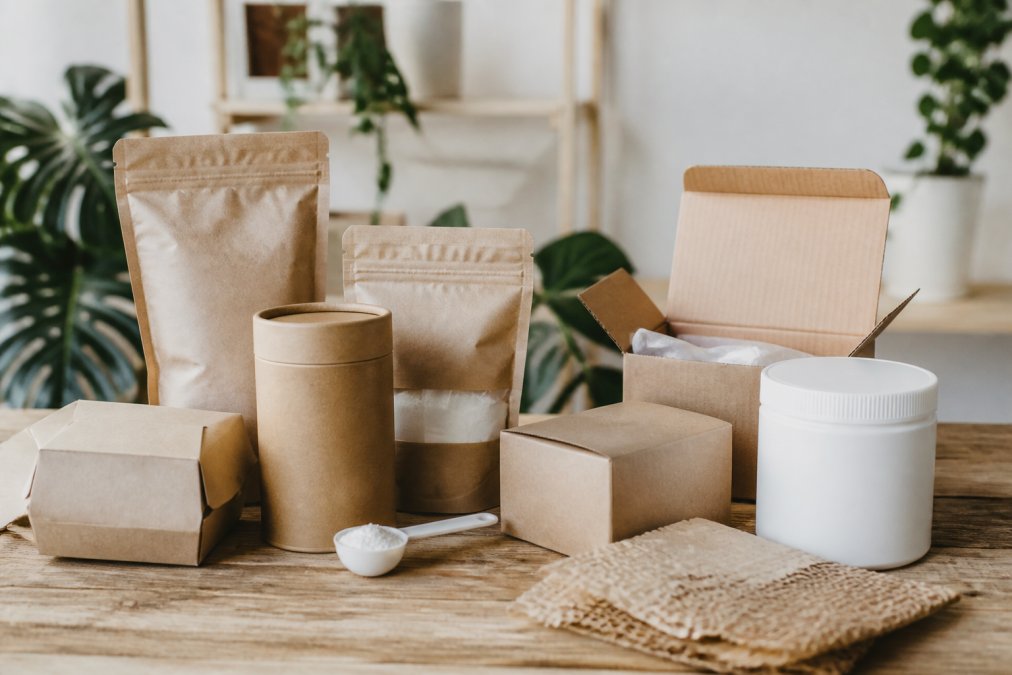
Sustainable supplement packaging solutions fall into four practical categories: post-consumer recycled (PCR) content, mono-material structures, glass and aluminum, and paper-based formats. Each carries a different trade-off between recyclability, barrier performance, and cost.
Post-Consumer Recycled (PCR) and Mono-Material Pouches
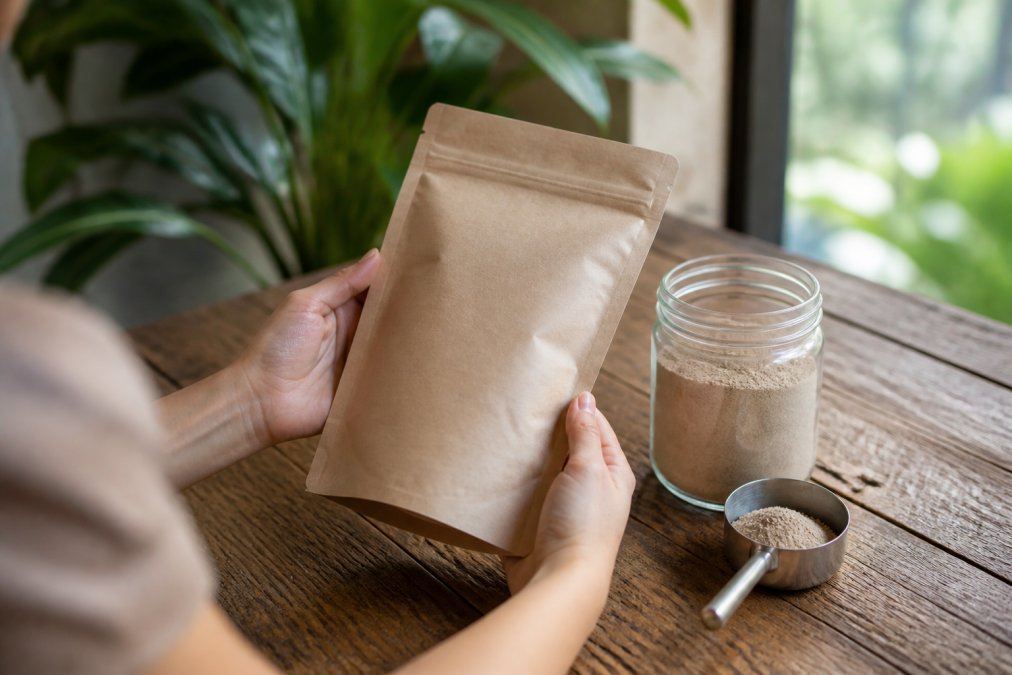
Mono-material pouches are the most significant packaging innovation in this category. Instead of bonding three or four different plastics together, a mono-material pouch uses a single polymer family, usually polyethylene, across every layer. That means the whole pouch can enter a recycling stream as one material rather than being rejected as a laminate.
Pros of mono-material and PCR pouches:
- Recyclable in many curbside streams depending on local infrastructure
- Lower carbon footprint than virgin multi-layer laminates
- Lightweight, which reduces shipping emissions
- Compatible with existing fill-and-seal equipment in many cases
Cons:
- Weaker moisture barrier than foil laminates
- Higher material cost per unit at low volumes
- Recycling acceptance varies by municipality
Glass, Aluminum, and Paper-Based Options
Glass is the most recyclable material in the group and has an effectively infinite recycling loop. It is also heavy, which raises shipping emissions and freight cost, and it is breakable, which is a real problem for a product that lives in gym bags. For a powder that needs to be scooped and resealed repeatedly, glass jars add weight without adding much functional benefit.
| Material | Recyclability | Moisture Barrier | Weight | Best For |
|---|---|---|---|---|
| Mono-material pouch | High (where accepted) | Moderate | Low | Powder, sachets at scale |
| PCR laminate pouch | Moderate | High | Low | Brands transitioning from foil |
| Glass | Very high | Very high | High | Premium positioning, small runs |
| Aluminum | Very high | Very high | Low-moderate | Cans, RTD formats |
| Coated paper | Moderate to high | Low-moderate | Low | Secondary packaging, cartons |
Plastic-Free Sports Nutrition Packaging: What It Takes
Plastic-free sports nutrition packaging is achievable, but it usually means accepting a shorter shelf life, a heavier package, or a higher unit cost, and often all three. There is no format today that matches a foil laminate on every dimension at the same price.
What it takes, in practice:
- Reformulate for a shorter shelf life. If the barrier is weaker, the product needs to move faster through the supply chain. That changes forecasting, distributor terms, and retail rotation.
- Redesign the closure. A resealable zipper on a paper pouch behaves differently from one on a plastic pouch. Test it with real users, not just in the lab.
- Rework the filling line. Different material stiffness and seal behavior often require equipment adjustments or new tooling.
- Recalculate freight. Glass and heavier formats change pallet density and shipping cost per unit.
- Verify food-grade compliance. Every material that touches the powder must meet FDA food-contact requirements.
Moisture Barriers and Shelf-Life: The Technical Challenge
Moisture protection is the single hardest technical problem in eco friendly packaging for sports nutrition supplements. Electrolyte powders are hygroscopic, meaning they absorb moisture from the air. Once they do, they clump, they lose flowability, and flavor and potency degrade.
Two measurements decide whether a package will work:
- Moisture vapor transmission rate (MVTR): how much water vapor passes through the material over time. Lower is better.
- Oxygen transmission rate (OTR): how much oxygen crosses the barrier. Critical for any formula with fats, oils, or oxidation-sensitive actives.
Benefits of Plant-Based Electrolyte Powder and Clean Formulas
Plant-based electrolyte powder pairs naturally with sustainable packaging because the two decisions appeal to the same buyer. Someone choosing a clean formula with no sucralose or erythritol is already reading the label closely, and that same person notices what the label is printed on.
The benefits stack:
- Cleaner ingredient decks mean fewer additives that need protection from oxidation, which can simplify barrier requirements.
- Zero sugar and low calorie counts reduce the sticky residue that clogs seals and attracts moisture in a resealable pouch.
- Plant-based positioning aligns with the environmental story a lighter package tells.
- Fewer synthetic components often means a shorter, more transparent label, which supports the sustainability message rather than competing with it.
Regulatory Compliance and Food Safety Standards
Regulatory compliance is where packaging transitions stall. In the United States, any material that contacts food must meet FDA food-contact substance requirements, and the supplier should provide a letter of guarantee or a food-contact compliance statement for every component, including adhesives, coatings, and inks. Ensuring that these chemical safety standards are met across the entire supply chain remains the most effective way to implement toxin free food packaging throughout the broader nutrition industry.
Two more layers matter:
- State-level packaging waste regulations. Several states have enacted extended producer responsibility (EPR) laws for packaging, which shift disposal and recycling costs onto producers. Requirements, thresholds, and reporting obligations differ by state, so verify current rules with your state environmental agency before committing to a format. The EPA's guidance on sustainable materials management is a useful starting point for understanding the federal framework.
- Recyclability claims. If you print a recyclable claim, it needs to be substantiated. The FTC Green Guides set the standard for environmental marketing claims, and unqualified recyclable claims on a package that most consumers cannot actually recycle invite scrutiny.
Cost-Benefit Analysis for Small and Mid-Sized Brands
The honest answer for small and mid-sized brands is that eco friendly packaging costs more per unit at low volumes, and the break-even point depends on three variables: order quantity, format, and whether you can absorb a shorter shelf life.
Where the money goes:
- Tooling and setup. A new pouch format may require new fill-line tooling or seal jaw changes. This is a one-time cost that hurts most at small scale.
- Material cost per unit. Mono-material and PCR films typically carry a premium over standard laminate at low volumes. That premium narrows as volume rises.
- Freight. Lighter formats save money here. Glass loses money here.
- Waste and returns. A shorter shelf life means more product written off if forecasting is loose.
- Marketing value. A credible sustainability story can support a higher price point and improve retail placement, which is the offset most spreadsheets forget to include.
A practical way to decide:
- Get quotes at your actual annual volume, not a hypothetical one
- Model freight per unit for each format, including pallet density
- Run a shelf-life study before committing to a barrier downgrade
- Confirm PCR or paper material is cleared for direct food contact
- Check which states' EPR rules apply to your sales footprint
- Estimate the price premium your customer base will actually accept
- Pilot one SKU before converting the whole line
Conclusion
The technical barriers to eco friendly packaging for sports nutrition supplements are real: moisture control, shelf-life stability, and food-contact compliance do not solve themselves. But the direction of travel is clear, and the brands that start now will have the supply relationships, the tested formats, and the substantiated claims in place before packaging waste regulations tighten further.
Frequently Asked Questions
What are the most sustainable materials for supplement packaging?
Post-consumer recycled (PCR) plastic, mono-material stand-up pouches, aluminum, glass, and paper-based options are the most sustainable choices. Mono-material pouches are easier to recycle because they use a single polymer type. PCR plastic reduces demand for virgin resin. Aluminum and glass have high recyclability but weigh more, which raises transport emissions. The best choice depends on your product's moisture sensitivity, shelf-life needs, and the recycling infrastructure available to your customers.
Is compostable packaging safe for sports nutrition powders?
Compostable packaging can be safe for sports powders, but only if it meets food-grade standards and provides adequate moisture and oxygen barriers. Many compostable films have higher moisture transmission rates than conventional laminates, which can shorten shelf-life for hygroscopic ingredients like electrolyte blends. Brands should run accelerated shelf-life testing before switching. Also check that the packaging is certified compostable under ASTM standards and that local composting facilities accept it, since curbside programs often do not.
How can supplement brands reduce plastic waste?
Brands can reduce plastic waste by switching to mono-material or PCR pouches, offering refillable systems, right-sizing packaging to the product volume, and printing clear end-of-life disposal instructions on the label. Lightweighting, which means using less material per package, also cuts waste. Small-to-mid-sized brands can start with one product line, measure the plastic reduction, and scale from there. Consumer education matters too, because recyclability depends on what local waste management programs actually accept.
What are the benefits of switching to eco friendly packaging for sports nutrition?
Eco friendly packaging for sports nutrition supplements can lower your carbon footprint, meet growing consumer demand for sustainable products, and differentiate your brand on shelf. Many eco-conscious consumers check packaging claims before buying. Sustainable sourcing and plastic waste reduction also support supply chain sustainability goals. The trade-offs are higher material costs and the need to verify barrier properties, so brands should weigh the cost-benefit before committing to a full switch.