 how-to
DIY Electrolyte Drink Recipes for Athletes
Table of Contents
- Why Athletes Need Homemade Electrolyte Drink Recipes
- Essential Ingredients for a Homemade Electrolyte Drink Recipe
- Basic Homemade Sports Drink Formula
- DIY Electrolyte Drink for Running and Endurance
- Homemade Electrolyte Drink Without Sugar
- Storage, Safety, and Batch Preparation
- Common Mistakes to Avoid When Making Homemade Electrolyte Drinks
- Frequently Asked Questions
Last Updated: October 7, 2026
Why Athletes Need Homemade Electrolyte Drink Recipes
Sweat is your body's cooling system. When you exercise, you lose water and minerals through perspiration. These minerals, sodium, potassium, magnesium, are electrolytes. They control muscle function, nerve signals, and fluid balance.
Commercial sports drinks work, but they often contain added sugars and artificial sweeteners. Many athletes want to avoid those ingredients. This is where homemade electrolyte drink recipes come in.
Making your own diy electrolyte drink for running gives you complete control. You choose the ingredients. You control the sweetness. You know exactly what goes into your body.
At Hydrate Heroes, we believe clean hydration matters. Whether you're training for a marathon or playing recreational sports, a homemade electrolyte drink recipe can support your performance without the artificial additives found in many commercial options.
The basic science is simple: your muscles need electrolytes to contract. Your nervous system needs them to send signals. Your heart needs them to beat steadily. When you sweat during exercise, you deplete these minerals.
Essential Ingredients for a Homemade Electrolyte Drink Recipe
Sodium and Salt Sources
Sodium is the most important electrolyte for athletes. It regulates fluid balance and muscle contractions. Many athletes fear sodium, but it's essential during exercise.
Sea salt is your best option. One-quarter teaspoon of sea salt provides roughly 600 mg of sodium. That's enough for most workouts under 90 minutes.
Himalayan pink salt works too. It contains trace minerals beyond just sodium. The mineral content is slightly lower than sea salt, but the difference is negligible for most athletes.
Table salt works in a pinch, but sea salt and Himalayan salt taste better and provide additional minerals. Avoid iodized salt if possible, the iodine can taste metallic in drinks.
Potassium and Magnesium
Potassium prevents muscle cramps. Magnesium supports muscle relaxation and energy production. You need both for sustained performance.
Coconut water is your easiest source. One cup of coconut water contains about 600 mg of potassium. It also has natural sweetness, so you won't need as much added sugar.
If you don't like coconut water, bananas work. Blend half a banana into your drink for potassium without the coconut flavor.
For magnesium, spinach is your secret weapon. A handful of fresh spinach adds magnesium without changing the taste much. Blend it smooth so you don't see the greens.
Carbohydrates and Natural Sweeteners
Carbohydrates fuel your muscles during exercise. They also help your body absorb electrolytes more efficiently.
Honey is ideal. Two tablespoons of honey provide about 32 grams of carbohydrates and natural flavor. Honey dissolves easily and tastes clean without artificial aftertaste.
Maple syrup works similarly. It has a distinct flavor that some athletes prefer. Use the same amount as honey.
For athletes avoiding all sweeteners, you can skip this step. Your drink will taste salty and tart, but it will still hydrate effectively. Many endurance athletes actually prefer unsweetened electrolyte drinks.
Fruit juice adds both carbs and flavor. Orange juice, lemon juice, and lime juice all work. Use fresh citrus when possible, bottled juice sometimes contains added sugars.
Basic Homemade Sports Drink Formula
Step-by-Step Mixing Instructions
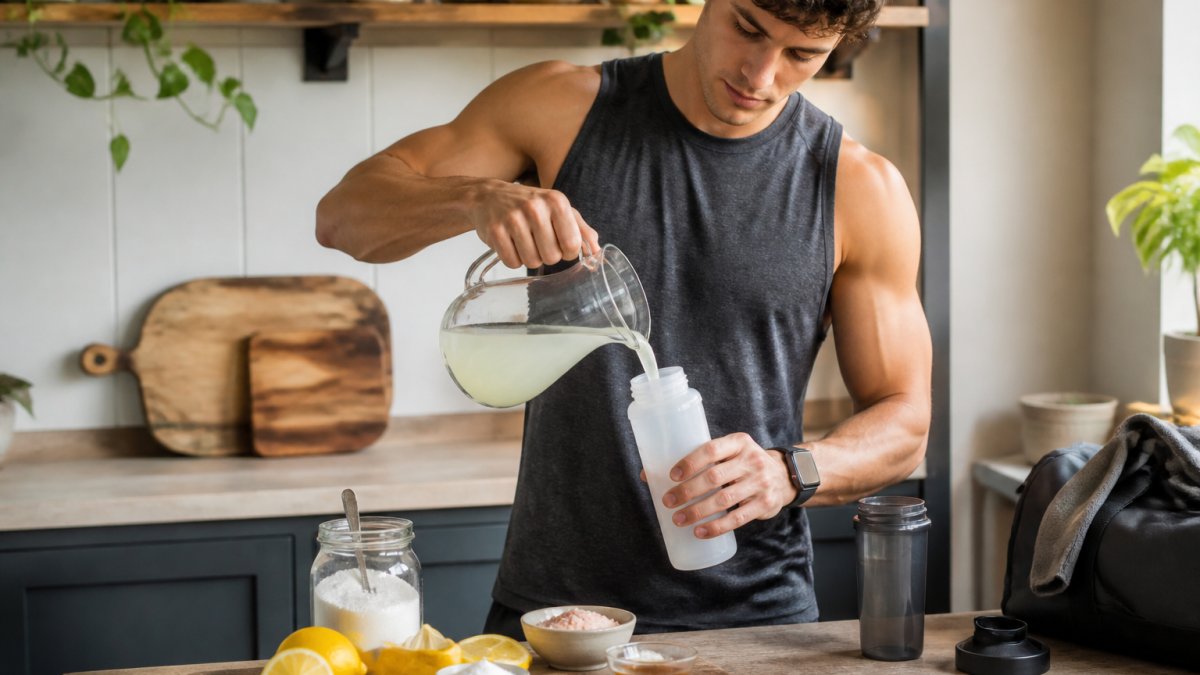
Making a homemade electrolyte drink takes five minutes. Here's the process:
-
Start with water. Use 16-20 ounces of cold water as your base. Cold drinks taste better and absorb faster than room-temperature drinks.
-
Add salt. Dissolve one-quarter teaspoon of sea salt into the water. Stir for 30 seconds until the salt completely dissolves. You shouldn't see any crystals.
-
Add sweetener. Pour in two tablespoons of honey or maple syrup. Stir until fully mixed. This step takes about one minute.
-
Add citrus juice. Squeeze in juice from one lemon or lime, or one-quarter cup of fresh orange juice. Fresh juice tastes better than bottled, but both work.
-
Add coconut water. Pour in one-quarter to one-half cup of coconut water. This adds potassium and additional flavor depth.
-
Chill and serve. Add ice if desired. Drink within 24 hours for best flavor and nutrient retention.
Ingredient Measurements and Ratios
The formula above works for most athletes. Here's the breakdown:
| Ingredient | Amount | Purpose |
|---|---|---|
| Water | 16-20 oz | Hydration base |
| Sea salt | 1/4 tsp | Sodium (600 mg) |
| Honey or maple syrup | 2 tbsp | Carbs and sweetness |
| Fresh citrus juice | 1/4 cup | Flavor and vitamin C |
| Coconut water | 1/4-1/2 cup | Potassium (600 mg) |
This recipe provides roughly 60-80 grams of carbohydrates per serving, which matches most sports drink guidelines. The sodium-to-carbohydrate ratio supports proper fluid absorption.
Adjust amounts based on taste preference. Some athletes like sweeter drinks. Others prefer more tart flavor from citrus. The electrolyte amounts matter more than exact taste.
DIY Electrolyte Drink for Running and Endurance
Hydration Needs by Workout Duration
Not every workout needs an electrolyte drink. Water alone is fine for exercise under 60 minutes.
For workouts between 60-90 minutes, a light electrolyte drink helps. You're losing significant fluids and minerals, but not so much that you need maximum carbohydrate support.
For workouts over 90 minutes, a full-strength electrolyte drink becomes important. Your glycogen stores deplete. Your electrolyte losses increase. Your body needs both carbs and minerals to maintain performance.
Marathon training and ultra-distance running require sustained electrolyte replacement. A homemade electrolyte drink recipe designed for endurance should include higher carbohydrate amounts, closer to 100-120 grams per serving instead of 60-80.
Electrolyte and Carbohydrate Amounts Per Serving
A standard serving of your homemade electrolyte drink recipe provides:
- Sodium: 600 mg (from one-quarter teaspoon sea salt)
- Potassium: 600-800 mg (from coconut water and citrus)
- Carbohydrates: 60-80 grams (from honey and fruit juice)
- Magnesium: 10-20 mg (if you add spinach)
Most athletes need 500-700 mg of sodium per hour during exercise. A 20-ounce serving covers that. For longer workouts, drink one serving every 45-60 minutes.
Carbohydrate needs vary by body weight and exercise intensity. A general guideline: consume 30-60 grams of carbs per hour for moderate-intensity exercise, and 60-90 grams per hour for high-intensity or ultra-endurance efforts. Refining these intake windows requires balancing liquid fuel with solid food intake to optimize game day nutrition.
Your homemade electrolyte drink recipe provides flexibility. Make it stronger by adding more honey. Make it lighter by using more water. Adjust based on how your stomach feels during training.
Homemade Electrolyte Drink Without Sugar
Sugar-Free Flavor Variations
Some athletes follow keto or low-carb diets. Others simply prefer to avoid sugar. You can make an effective diy electrolyte drink without added sweeteners.
The salt and citrus provide enough flavor to make the drink palatable. Many athletes actually prefer unsweetened versions once they adjust to the taste.
Try these variations:
- Lemon-mint: Fresh lemon juice plus a handful of fresh mint leaves, steeped for five minutes
- Lime-ginger: Fresh lime juice plus one-quarter teaspoon of fresh ginger powder
- Orange-turmeric: Fresh orange juice plus one-quarter teaspoon of turmeric powder
- Cucumber-basil: Cucumber juice plus three fresh basil leaves, blended smooth
- Tart berry: One-quarter cup of unsweetened cranberry or pomegranate juice
These variations work because the natural acids and flavors mask the saltiness. Citrus and herbs are your friends in sugar-free electrolyte drinks.
Ingredient Substitutions for Dietary Needs
Different diets require different approaches to a homemade electrolyte drink recipe.
For keto athletes: Skip the honey and use only coconut water and citrus for carbs. One-quarter cup of coconut water contains about 3 grams of net carbs, which fits most keto macros. Add a pinch of stevia if you want sweetness, but avoid erythritol, it can cause digestive upset during exercise.
For vegan athletes: All ingredients in the basic recipe are plant-based. Coconut water, sea salt, honey, and citrus juice are all vegan-friendly.
For paleo athletes: The basic recipe fits paleo guidelines. Use honey instead of maple syrup if you prefer. Avoid any processed sweeteners.
For athletes with sodium sensitivity: Reduce salt to one-eighth teaspoon. Add extra potassium from coconut water or banana. Consult your doctor if you have blood pressure concerns.
For athletes with fructose intolerance: Use maple syrup instead of honey. Avoid fruit juices and use only coconut water for flavor. Maple syrup contains glucose, which your body processes differently than fructose.
Storage, Safety, and Batch Preparation
Making a week's worth of electrolyte drink at once saves time. Here's how to do it safely.
Prepare your diy electrolyte drink recipe in batches using glass containers. Glass doesn't react with acidic citrus juice like plastic can.
Mix your base ingredients: water, salt, honey, and citrus juice. Store this concentrate in the refrigerator. It keeps for one week.
Add coconut water just before drinking. Coconut water has a shorter shelf life than other ingredients. Adding it fresh prevents spoilage and maintains nutrient quality.
Label your batch with the date prepared. Use within seven days for best flavor and safety. After seven days, the drink may develop off-flavors or bacterial growth.
Keep your prepared drink in the coldest part of your refrigerator. Don't leave it at room temperature for more than two hours, especially during warm months.
For travel, prepare individual servings in small bottles. Freeze them the night before your workout. They'll thaw during your warm-up and be perfectly cold by the time you start exercising.
Common Mistakes to Avoid When Making Homemade Electrolyte Drinks
The most common mistake is using too much salt. One-quarter teaspoon tastes salty to most people. Resist the urge to add more.
Another mistake is skipping the carbohydrates. Athletes often think electrolytes alone are enough. They're not. Carbs help your body absorb electrolytes more efficiently.
Don't use distilled water. Distilled water lacks minerals and can actually pull electrolytes from your body through osmosis.
Avoid bottled lemon juice and lime juice. Fresh citrus tastes dramatically better and contains more vitamin C. Bottled versions often contain preservatives that affect flavor.
Don't make your drink too concentrated. A common mistake is adding too much honey or coconut water, thinking more is better.
Finally, don't assume one recipe works for all workouts.
Making your own electrolyte drink gives you control over ingredients and costs. You avoid artificial sweeteners and unnecessary additives.
At Hydrate Heroes, we understand that clean hydration matters. While homemade recipes are excellent, some athletes prefer the convenience and consistency of a premium powder.
Frequently Asked Questions
How much sodium should a homemade electrolyte drink contain?
Most athletes need 300-600 mg of sodium per liter of fluid during exercise lasting over 60 minutes. For shorter workouts, 200-300 mg per liter is sufficient. Start with 1/4 teaspoon of sea salt per liter (about 575 mg sodium) and adjust based on sweat rate and taste. Those managing Type 2 diabetes or hypertension should consult their doctor about sodium intake and use the lower range.
Can you make an electrolyte drink without added sugar?
Yes. Sugar-free homemade electrolyte drinks work well for shorter workouts under 90 minutes. For endurance activities, carbohydrates (30-60 grams per hour) improve performance; use honey, maple syrup, or fruit juice instead of refined sugar. Avoid artificial sweeteners like sucralose and erythritol, which can cause digestive upset. Natural alternatives like stevia or monk fruit are options, though they provide no energy boost.
What is the best homemade electrolyte drink recipe for athletes?
A basic recipe combines 1 liter of water, 1/4 teaspoon sea salt, 1/4 cup fresh citrus juice (lemon or lime), 1/4 cup coconut water, and 2-3 tablespoons honey or maple syrup. This delivers sodium, potassium, carbohydrates, and flavor. For keto or low-carb athletes, skip the sweetener and use only salt, citrus, and coconut water. Adjust proportions based on workout intensity and personal sweat loss.
When should athletes drink an electrolyte beverage?
Drink 16-24 ounces of electrolyte fluid 2-3 hours before exercise, then 6-8 ounces every 15-20 minutes during workouts lasting over 60 minutes. For shorter exercise or low-intensity activity, water is usually sufficient. After exercise, continue hydrating with electrolytes for 2-4 hours to replace sweat losses. Avoid drinking electrolytes every day unless you exercise regularly or sweat heavily.